Masculinity in Asia is being rewritten and what it means for brands, VIRTUE Asia report
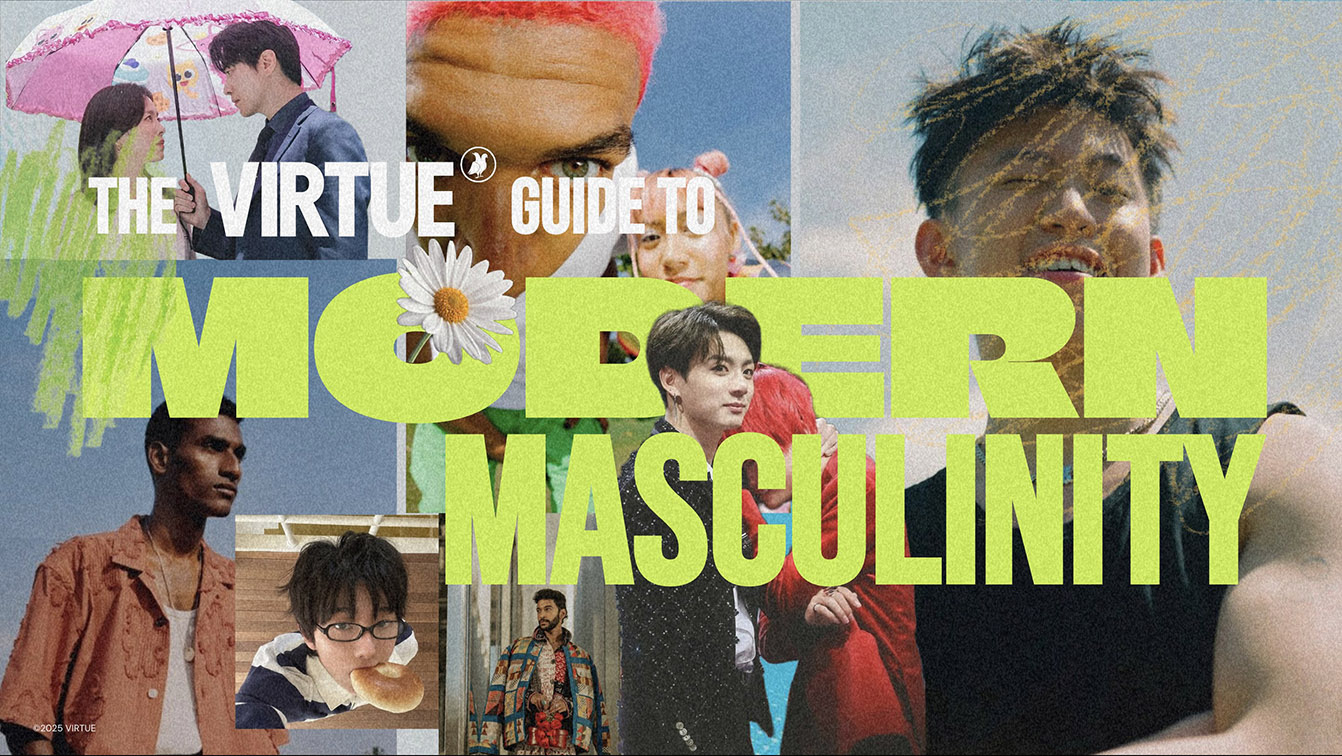
Masculinity in Asia is undergoing one of its most significant shifts in decades. New findings from VIRTUE Asia reveal that men are challenging the expectations they grew up with, moving beyond inherited ideals of stoicism, dominance, and duty to navigate a cultural landscape full of new models, new values, and new bonds.
According to ‘The VIRTUE Guide To Modern Masculinity’, today’s masculinity isn’t about conforming to a single standard, but navigating a shifting mix of ambition, vulnerability, balance, and self-expression. As this plural landscape takes shape and cultural scripts loosen, this shift opens up a powerful moment for brands to help men navigate and express a more expansive version of manhood.
Zoe Chen, strategy director at VIRTUE Asia, said: “Masculinity in Asia is no longer a single story. Men are negotiating between tradition and self-expression, experimenting with who they are, how they care, and what success means. Our research shows this is less about rejecting the past and more about remixing it. The next generation of men is defining masculinity as a spectrum, not a template. Strength now sits alongside empathy, presence alongside performance, and identity alongside experimentation.”
Developed with global market research and data analytics company Milieu Insight and strategic insights practice Canvas8, The VIRTUE Guide To Modern Masculinity pulls back the curtain on a regional identity shift, blending a 300-man survey across Thailand, Indonesia and India, with stimulus-led conversations that capture how men actually react to emerging narratives of masculinity. Anchored by a deep dive into the signals shaping behaviour across culture, media, influencers, and campaigns, the study uncovers three emerging codes of masculinity shaping male identity across Asia.
Code 1: The Multiverse of Men
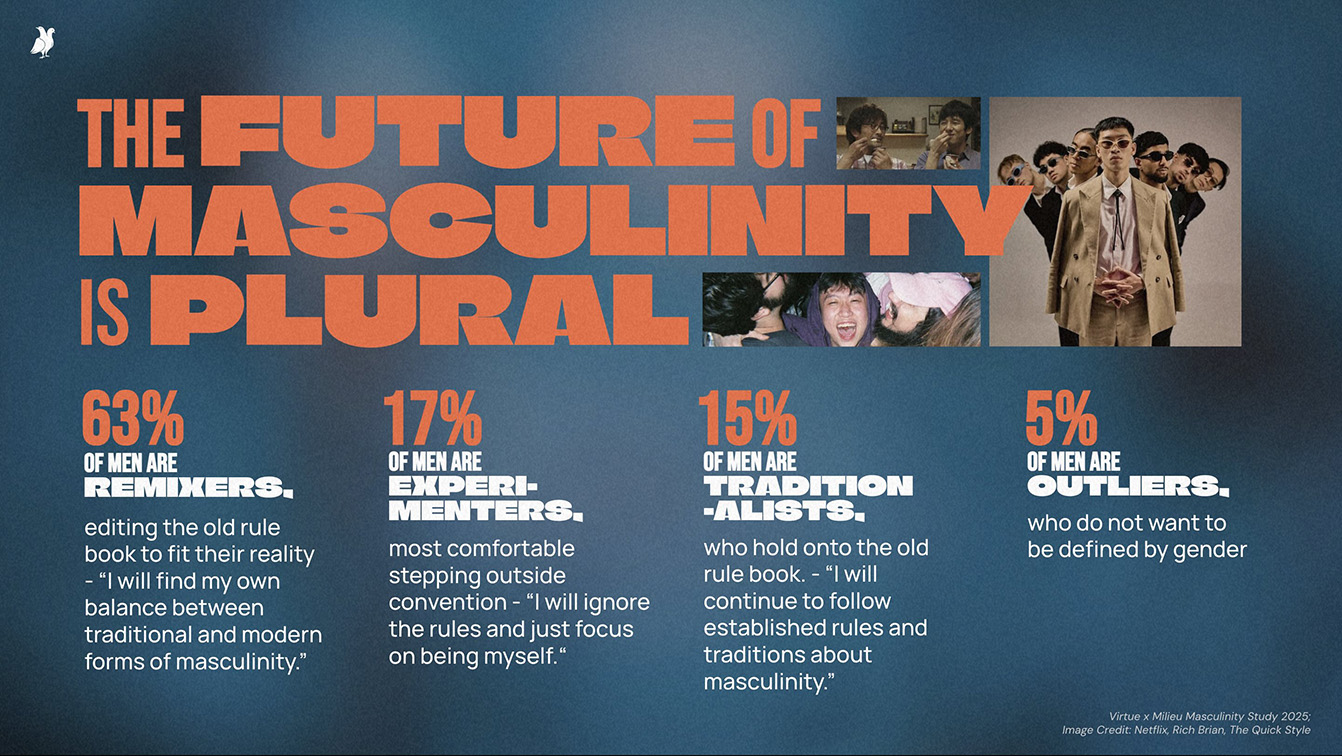
The era of one-size-fits-all masculinity is over. Across Asia, men are navigating a tug-of-war between the scripts they inherited and the identities they are now free to explore. From global idols to hyper-local creators, culture is multiplying the models of manhood available and allowing men to remix tradition with modernity in ways that feel authentic, personal, and proudly individual.
The research shows 63% of men are ‘Remixers’, adapting traditional norms to fit their realities, while 17% are ‘Experimenters’, comfortable stepping beyond convention. 15% remain ‘Traditionalists’ who hold onto established values, and 5% are ‘Outliers’ rejecting gender labels entirely.
For brands that once championed a single masculine ideal, the opportunity now is to reflect the full ensemble. That means designing products, campaigns, and experiences that recognise men as plural, evolving, and self-authored, creating space for them to explore, co-create, and express who they’re becoming.
Code 2: The New Male Currency
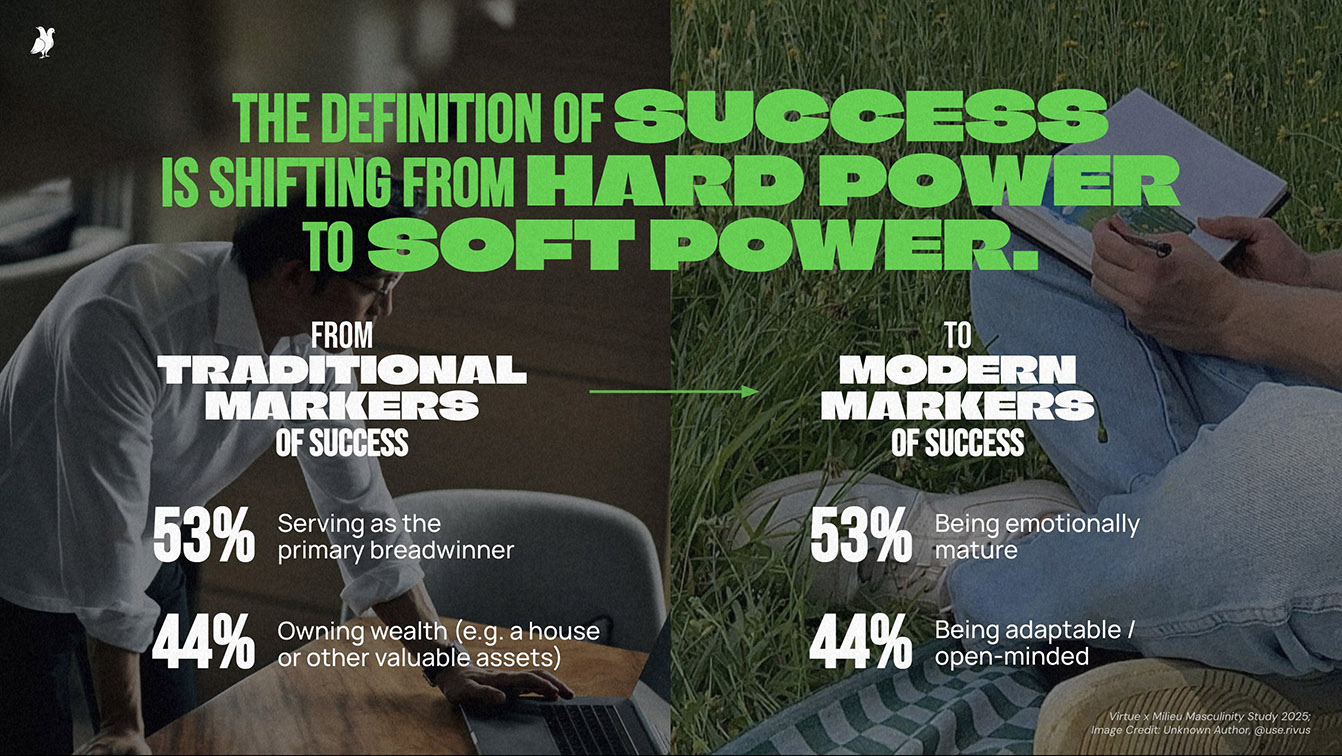
Success once meant control over wealth, work, and the world around them, but that scoreboard is shifting. Today, achievement is measured less by hard power, dominance and control; and more by soft power, by how men lead, care, and connect. The old markers of power still linger, but they’re being rewritten in real time.
The research highlights traditional success markers like being the primary breadwinner (53%), owning wealth (44%) or climbing the career ladder (37%) are giving way to more human moments such as emotional maturity (53%) and open-mindedness (47%).
This means brands need to recognise the shift from hard power to soft power. Instead of glorifying balance, brands can humanise it. Men don’t need more ideals to live up to, they need room to breathe. The next generation of power is measured in emotional intelligence and open-mindedness, not performance, and winning today means helping men feel held together, not stretched thin.
Code 3: The New Love Languages
For generations men were taught to express love through duty, to provide and protect rather than to feel and connect. As fatherhood, partnerships and friendships develop, love is being redefined as emotional presence and shared responsibility. Men are learning that love demands accountability: the courage to be present, to care out loud, and to build connection through shared emotional labor.
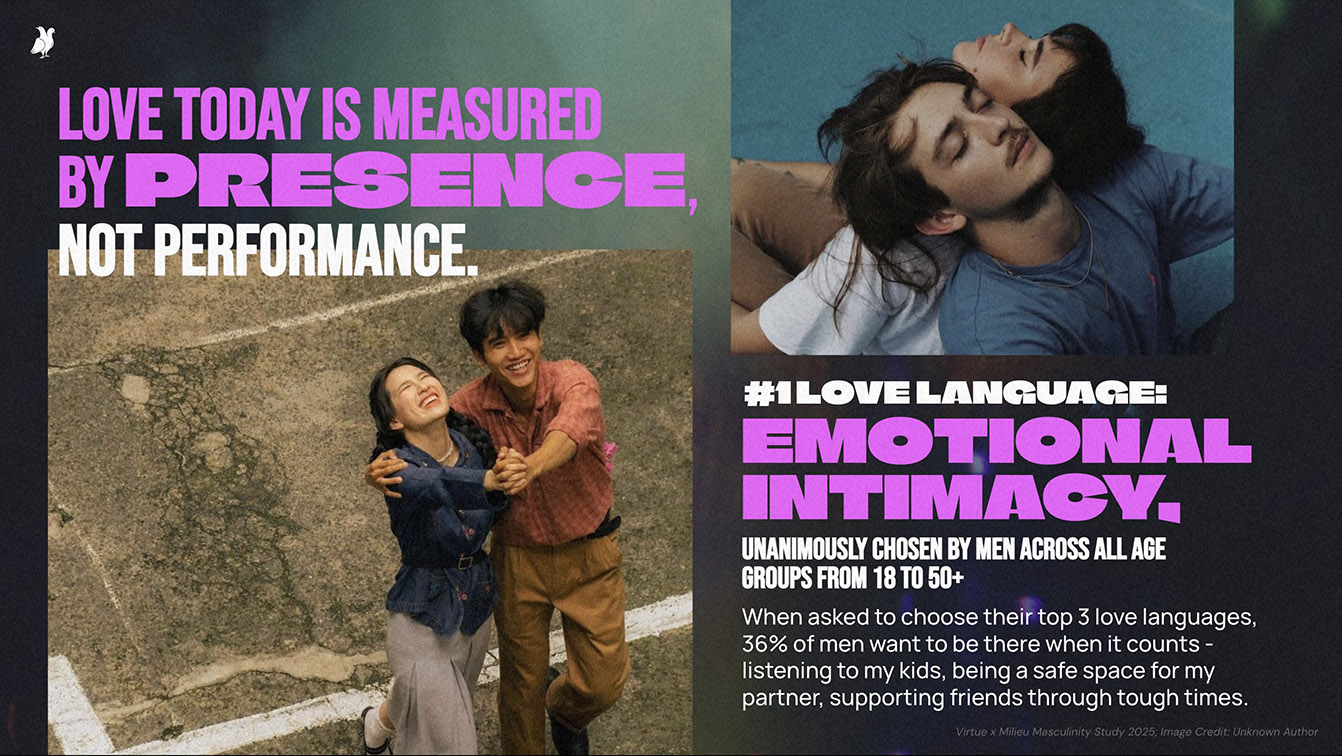
The research finds emotional intimacy is the most popular ‘love language’ (36%), unanimously chosen by men across all age groups from 18 to 50+. When asked to choose their top three love languages, men want to be there when it matters – listening to children, supporting partners, and standing by friends through hardship. These everyday acts of care are replacing grand gestures of sacrifice as the truest signs of connection.
Brands can play a powerful role in supporting this by helping men express their new love languages in more grounded, collaborative, and consistent ways. By framing care as something built together, rather than carried alone, brands can turn emotional awareness into action, helping men move from intention to practice and making reliability, empathy, and accountability visible, and achievable.
Chen added: “With masculinity being rewritten in real time, brands have a rare chance to help shape where culture goes next. The ones that lead will design for plurality, presence, and emotional fluency, not outdated ideals. Culture is ready. It’s calling for brands brave enough to answer.”