Vantage Picture’s James Duong on bringing Chinese productions to Vietnam
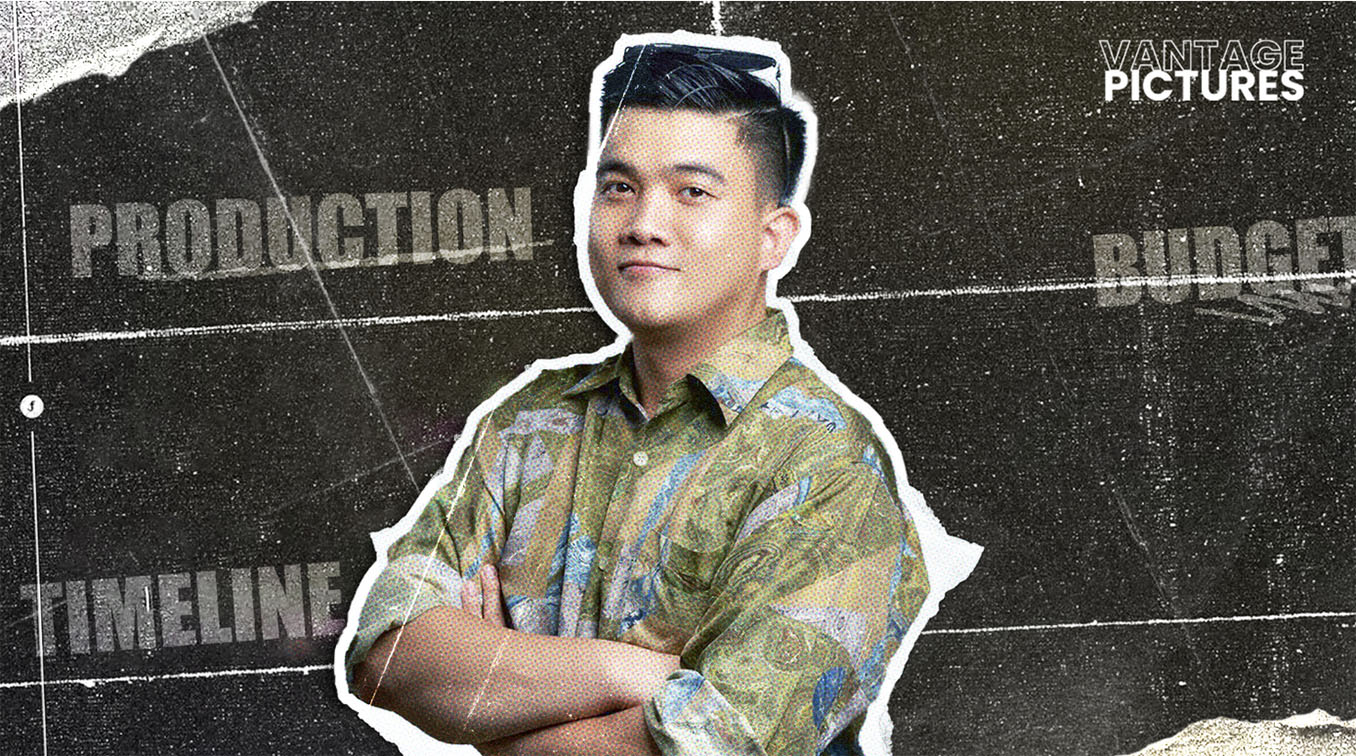
For James Duong, Executive Producer at Vantage Pictures, producing isn’t just about getting a shoot done – it’s about building a bridge.
Over the past few years, Duong has quietly positioned Vietnam as a viable production hub for Chinese tech brands looking to go global—handling everything from high-speed product launches to complex, multi-market campaigns.
It’s a space that demands more than execution. It requires translation—of expectations, of workflows, and often, of mindset.
And for Duong, that’s where the real work begins.
You’ve been bringing Chinese tech projects into Vietnam. How did that start?
It wasn’t really a strategic move at the beginning.
Earlier in my career I spent several years at DJI, so I was already very close to the Shenzhen tech ecosystem. Once you work with a few brands there, word travels quickly.
Some of the first projects came through those relationships, and then it naturally grew from there.
What we realised quite quickly was that many of these companies want content that feels global—but they don’t necessarily want to produce everything in China.
That’s where Vietnam and Southeast Asia started to make a lot of sense.
Why Vietnam specifically?
It’s a mix of things. You have strong crews, competitive costs, and a production environment that can move fast. But more importantly, Vietnam doesn’t feel overly familiar in the way some other markets do, which is valuable for global campaigns.
At the same time, it’s geographically and culturally close enough that Chinese clients feel comfortable working here. So you get this balance—an international feel, but still very operationally accessible.
Another advantage is the crews, especially the art departments. They’re very capable and used to working quickly. For certain campaigns—particularly tech or product work—we often build environments from scratch to better control reflections, surfaces, and lighting.
These builds are usually lightweight and modular, using materials like hiflex or soft panels rather than heavy construction. That allows the team to move quickly and make adjustments on set while keeping production efficient.
Building sets also allows us to fully realise the creative vision for the client. Everything can be customised to their needs, which means no two sets look the same. Each environment is designed specifically for the product and the campaign.
That level of customisation is important because it allows brands to express their identity through the environment—specific design language, small details, and meticulous attention that are unique to that brand. When done well, the set itself becomes part of the storytelling.
So Vietnam works well both as a location and as a place where you can create controlled environments when the project requires it.
What’s different about producing for Chinese tech brands?
The pace is probably the biggest difference. A lot of these companies operate in what people call the 996 culture—very intense work cycles where things move quickly and decisions happen fast.
They’re launching products constantly, and with how fast technology is evolving—especially in areas like AI, robotics, and consumer electronics—the marketing content has to keep up with that development. As a producer, it’s actually important to understand the product quite well. If you don’t understand the technology, it’s very difficult to shoot it properly or communicate its value visually.
Another thing is the mindset. Many of these companies approach marketing almost like product development—they iterate quickly, test ideas, and refine things rapidly. So production has to be flexible and organised enough to keep up with that process.
At the same time, expectations are very high. Many of these brands closely study companies like Apple or Samsung—their marketing strategies and the level of polish in their campaigns—and aim to reach that same standard. The challenge is often achieving that level of quality within tighter timelines or budgets, so a big part of our job is finding smart production solutions that deliver premium results in a more efficient way.
So you’re really operating in this space where things move very fast, but the standard can’t drop.
You’re essentially translating between different production cultures. What does that actually look like day-to-day?
A lot of it starts with building trust. When you’re working with tech companies, clients want to feel that the producer actually understands the product and the brief—not just the logistics of the shoot. If you understand the technology and what the product is trying to achieve, it becomes much easier to communicate clearly with both the director and the client.
For me that’s quite important because I’m genuinely interested in technology. When you understand the product well, you can translate the brief more effectively into something visual.
The other part is cultural. Different markets simply work in different ways. A client might be very used to producing in one region where things are done a certain way, and then when they work somewhere else the process can feel quite different.
So part of the job is helping everyone understand those differences and making sure expectations are aligned early—how production works here, how decisions move, how much prep is needed.
In many ways the producer becomes the bridge between those worlds, making sure the creative idea, the technology behind the product, and the production process all connect smoothly.
What kind of projects are you seeing more of now?
Definitely more advanced tech and product work—robotics, AI-driven products, consumer electronics. But what’s changing is how the creative process around those campaigns is evolving.
Storytelling around tech products has always been important, but now with AI tools becoming more accessible, the scale of creative exploration is changing. Teams can test more ideas, visualize concepts faster, and push creative directions that might have been difficult or expensive before.
There’s a lot of discussion about AI replacing certain jobs, and in some areas it probably will. But if you use it properly, it can also expand what creatives are capable of doing. It allows directors and producers to experiment more and explore ideas that were previously impossible or impractical to execute.
So from a production perspective, the challenge now is balancing that—using AI as a tool to extend creative vision while still maintaining the craftsmanship and cinematic quality that audiences expect.
Has that changed how you approach production?
Yes. With tech products you naturally become more precise—materials, reflections, lighting all need to be carefully controlled because the product itself is often the hero.
But what’s interesting now is that not all “products” are physical anymore. Many of the things we’re promoting today are software, AI systems, or services that you can’t really hold in your hand. So the challenge becomes understanding what the technology actually does and translating that into something people can see and feel.
Sometimes that means showing the product inside real human situations, sometimes it’s more storytelling—building a moment where the technology quietly solves a problem or improves someone’s life. The goal is always the same: the audience should feel why they might want to try or use it.
AI tools are also becoming part of the workflow, especially for exploring ideas or visualizing concepts early. But I see them more as tools that support creativity rather than something that replaces it. The real work still comes from understanding the technology, the story behind it, and making it feel genuine for people watching.
What do you enjoy most about producing in this space?
Honestly, it’s the constant learning and problem-solving. Technology moves quickly, so I spend a lot of time staying close to new developments—AI, robotics, consumer electronics—and understanding how these products actually work. That helps when translating something technical into visuals that people can immediately understand.
For clients, that also means we can move faster and make better decisions during production. When the team understands both the technology and the production process, it becomes much easier to shape the right approach and avoid unnecessary trial and error.
Every project has different constraints—locations, timelines, logistics—and bringing all of that together in a way that feels seamless on screen is really the part I enjoy the most.
Vantage has been scaling pretty quickly. What’s been important in building the team?
The goal has always been to build a team that can operate globally, not just locally. Vietnam is our base, but the mindset needs to be international—understanding how different markets and crews work.
One principle I often mention is “dùng lửa thử vàng.” People grow through real projects and real pressure. Challenging productions are what help the team develop.
At the same time, we focus on teaching proper workflows that are commonly used by crews around the world. That helps our team collaborate smoothly with international clients coming to Vietnam, and also prepares them to work abroad. It really goes both ways.
The idea is to build a team that stays adaptable, keeps learning, and is comfortable working on productions anywhere.
What are clients actually looking for when they come to Vietnam now?
It’s changed.
Before, it was more about cost and flexibility. Now it’s about whether you can deliver at a global level.
Clients want confidence that the work will stand alongside anything produced in more established markets.
So the conversation is less about “Can you do it?” and more about “Can you do it at this level, consistently?”
And personally—what keeps you motivated in producing?
I enjoy building things—not just the projects themselves, but the systems behind them: the workflows, the relationships, the team.
Producing is a role where a lot of the work is invisible. If everything runs smoothly, it usually means many decisions were made quietly along the way. There’s something satisfying about that.
I also enjoy sharing knowledge with the team. Teaching others forces you to organise your own thinking and refine what you’ve learned over time. At the same time, I often work with crew members who have decades of experience, and I learn a lot from seeing how they approach problems.
So it becomes a continuous cycle—staying curious, learning from people around you, organising that knowledge, and passing it on to the next generation of producers and crew.
Finally, where do you see this going next?
I think production will become much more cross-border. Many tech brands are already thinking globally from the start, so campaigns are no longer tied to just one market.
What excites me is building a system where production can move between regions intelligently—choosing the right location, the right crew, and the right environment for each project. Vietnam is a strong base, but the real opportunity is connecting different production ecosystems together.
If we can keep refining that pipeline and collaboration across markets, I think some very interesting work will come from it.