
Dentsu Lab, D.A.V. Public School and Classteacher launch AI-powered ‘Bullying Decoder’
In schools across India, cameras have long been watching. But they have never been able to listen. Mandated by the Central Board of Secondary Education, CCTV systems capture classroom activity to support student safety. Yet one of the most pervasive forms of bullying – verbal bullying – often goes unaddressed. It unfolds in everyday interactions, leaves a lasting emotional impact, and is difficult to systematically understand at scale.
D.A.V. Public School, one of India’s largest school networks with over 1,000 branches, along with Classteacher, a pioneer in AI-powered smart classrooms, has partnered with Dentsu Lab to introduce Bullying Decoder – an innovation that builds on existing CCTV infrastructure to convert classroom audio feeds into aggregated insights, helping schools better understand and address patterns associated with verbal bullying.
While visual monitoring has become standard across schools, the accompanying audio feeds have remained largely untapped. Understanding the nuances of classroom interactions at scale is inherently complex, allowing behaviours such as body shaming, exclusionary remarks, or inappropriate comments to persist without clear visibility.
At the same time, counselling approaches in schools have often followed a one-size-fits-all model. These generic interventions often fail to address the evolving emotional maturity of students and the changing nature of bullying across different age groups and grades.
This has left a critical gap: an entire dimension of student experience remains unmeasured and therefore unaddressed.
Bullying Decoder integrates seamlessly with existing CCTV systems by activating unused audio feeds. Using AI, it listens to everyday classroom conversations and goes beyond simple keyword detection.
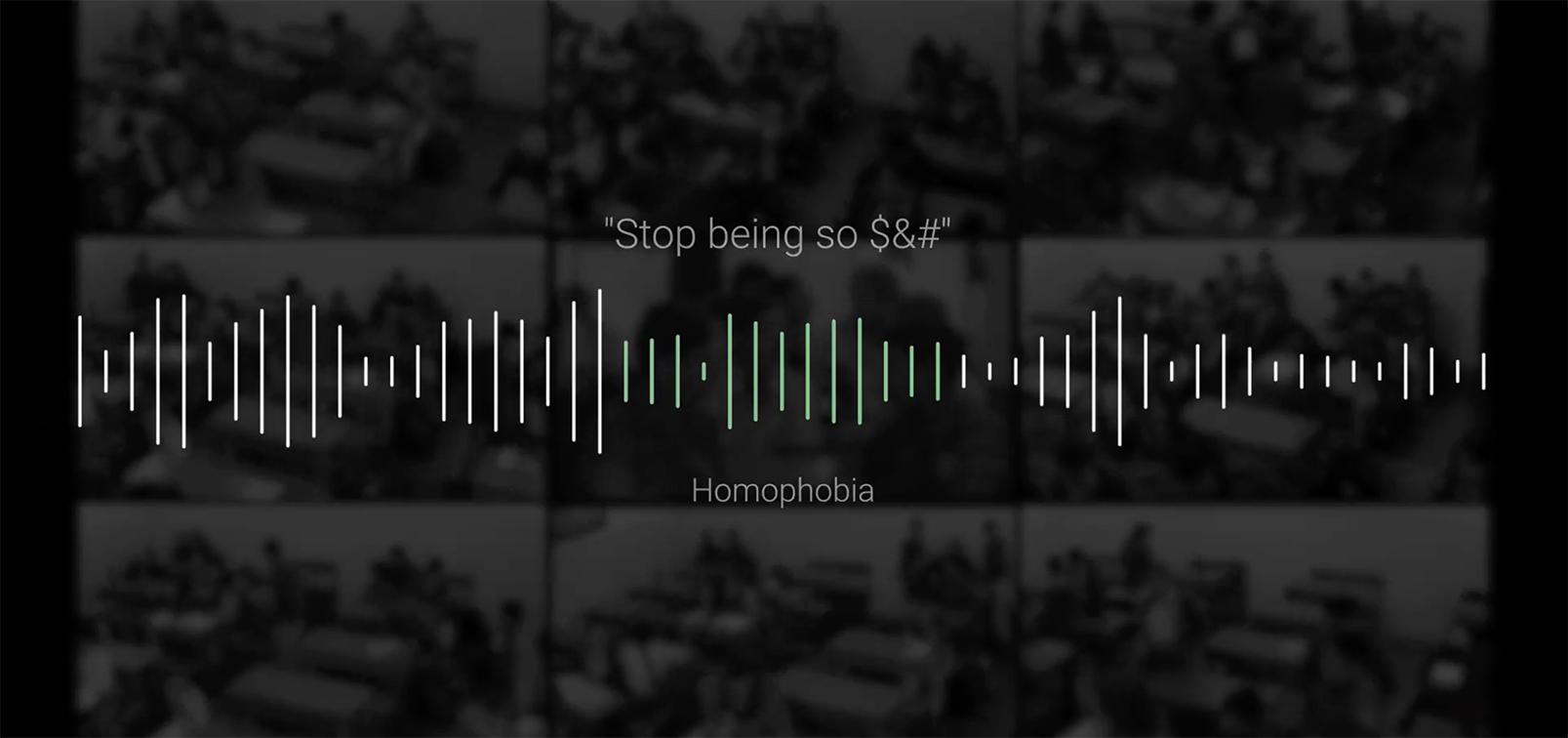
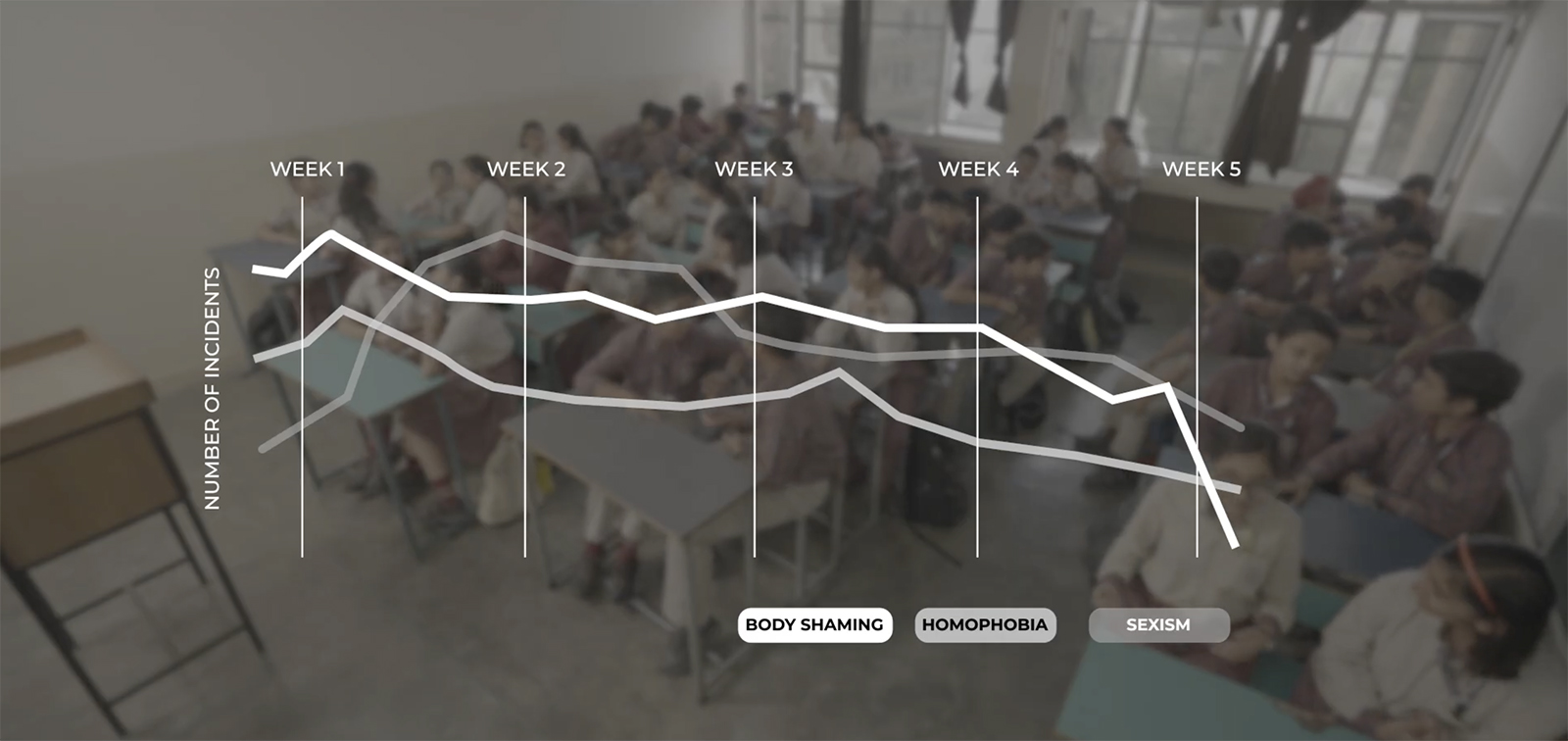
The system analyses emotional intensity, tone, and repetition to identify patterns of behaviour across classrooms and grade levels. These insights are then translated into a structured, easy-to-understand dashboard that reflects the emotional sentiment of each grade.
Importantly, the system does not identify or track individual students. Insights are anonymised and aggregated, ensuring privacy while enabling schools to better understand overall classroom dynamics.
By translating audio feeds into meaningful insights, Bullying Decoder supports schools in shifting from reactive responses to more informed, proactive interventions.
Educators and counsellors can design age-appropriate, context-specific sessions based on observed patterns within each grade. For instance, younger students may exhibit higher instances of body shaming, while older students may demonstrate more complex or intense forms of verbal aggression.
This allows counselling to be tailored to students’ emotional quotient, cognitive development, and the specific nature of bullying they experience-making interventions significantly more relevant and effective.

The system is guided by four core principles: Privacy, Pattern, Intervention, and Empathy.
Rather than focusing on surveillance or punitive action, Bullying Decoder is designed to support educators in understanding behavioural patterns and fostering a more empathetic school environment.
The system places the utmost priority on maintaining students’ privacy. It does not identify, tag, or track individual students. Importantly, no student audio conversations are stored. The system analyses overall classroom sentiment patterns and logs only aggregated insights – such as bullying intensity levels, categories, and subcategories rather than recording or retaining specific words, voices, or conversations.
These insights are presented through a secure dashboard accessible only to the school principal and partnered student counsellors. The information is stored as analytical insights, not audio data. These insights are then used by the counsellors to design grade-specific counselling interventions that address emerging behavioural patterns in a supportive and preventative manner.
Dr. Anita Gautam, DAV Principal, said: “Bullying Decoder reinforces our belief that every child deserves to feel safe, valued and understood. It strengthens our ongoing efforts to nurture a culture of empathy, awareness and timely support, ensuring that every student thrives in a caring and inclusive environment.”
Abhishek, Business Head, Classteacher Learning Systems, added: “We don’t see ourselves as just an ed-tech company. We see ourselves as problem solvers, constantly innovating, evolving, and exploring new ways to respond to the real challenges students face. Our goal is not simply to deliver products, but to create solutions that genuinely improve the learning environment.”
Gurbaksh Singh, Chief Creative Officer and Chief Innovation Officer, South Asia, dentsu, said: “Innovation isn’t always about adding more; sometimes it’s about reimagining what already exists. By tapping into the unused potential of existing school CCTV systems and embedding AI into them, we’ve transformed them into an intelligent system that can sense and respond to students’ emotional realities, making verbal bullying visible. The result is a human-centric solution that integrates seamlessly into classrooms, helping schools identify and address bullying early.”
Narayan Devanathan, President & Chief Strategy Officer, South Asia, dentsu, commented: “At Dentsu Lab, we build solutions grounded in real-world constraints but designed for scale. In a system serving over 250 million children, even small improvements in how we understand behaviour can create meaningful, lasting impact.”
With the thoughtful integration of Bullying Decoder into its well-established framework of pastoral care, D.A.V. Public School has observed early positive shifts in classroom interactions, with increasing emphasis on respect, sensitivity, and mutual understanding during the 2025–2026 academic session.
Building on these early learnings, the school plans to expand the initiative across more branches.