
The m25 Global Creative Series: Jody Xiong’s creative journey and the challenges of China’s ever changing advertising landscape
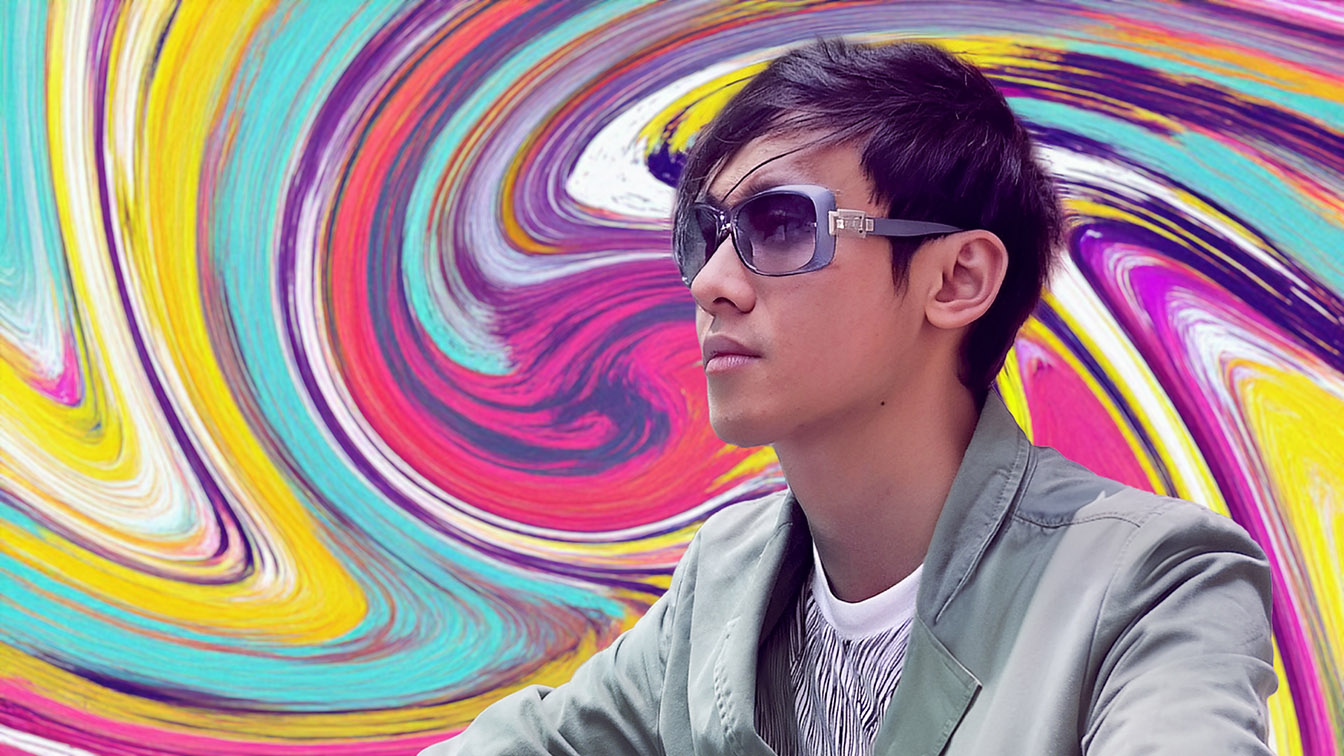
This episode of m25 Global Creative Series features Jody Xiong, one of China’s most awarded creative leaders and Founder of The Nine Shanghai. His career is defined by bold experimentation across film, digital media, installations, graphics, and interactive art.
Jody Xiong has earned recognition at the highest levels including serving as Visual Effects Director for Zhang Yimou’s team at the Beijing Winter Olympics Opening Ceremony, where his work reached billions worldwide.
His achievements continue to resonate globally: the award‑winning Magnificent in Xinjiang drew millions of visitors and won the first‑ever Grand Prix for Greater China at the Clio Music Awards; his short films have been selected at Oscar‑qualifying festivals; and his work has been exhibited at NY MoMA and the Carrousel du Louvre.
Ranked China’s No.1 most awarded creative leader for the past two years in Campaign Brief Asia’s Creative Rankings, Xiong stands as a visionary redefining the boundaries of creativity on the world stage.
Can you tell us about your journey to becoming a successful agency Founder/Creative, what inspired you to pursue this career, what challenges you faced while carving your niche in an ever-changing advertising landscape, and which campaign stands out as the most memorable for its impact on your market or region?
The most fascinating thing about creativity is that you never know what the next idea will be, just like the chocolate in the movie “Forrest Gump”. Every creative brief is an adventure and exploration.
After 18 years as a CD at a traditional 4A ad agency—where the process was a restrictive production line I sought a platform to push creative boundaries beyond acceptable risk. This led me to found The Nine (Jiu Yao), a ‘commercial art lab,’ not just an agency. ‘Yao’ means ‘energy.’ Today’s clients demand more than standard print or TV; they seek unique communication—a play, a song, performance art. The Nine responds by distilling human insight and integrating technology, art, design, entertainment, and events to connect brands with audiences.
I longed to create works beyond advertising. In 2022, I served as Visual Effects Director for the Beijing Winter Olympics Opening Ceremony under film master Zhang Yimou, contributing to the globally-viewed ‘Beginning of Spring’ and ‘Tribute to the People.’ I also created ‘The Bloom,’ a Paralympics art installation blending technology and art to express mental strength.
The performance, a “Tribute to the People,” began with 76 local and international university students walking in unison through the Bird’s Nest while the public welfare song “Let the World be Filled with Love” played. As they passed the stage, images of smiling global faces converged into a “river,” framed by Chinese knot streamers symbolizing “unity.” The slogan “Together for a Shared Future” then emerged, establishing the Winter Olympics theme. The second half echoed the “8 Minutes of Beijing” from the 2018 Pyeongchang closing ceremony with 24 Beijing Sport University students roller skating. They drew intertwined lines on the ground, “like a racetrack, like a Chinese knot,” leading to the Olympic motto, “Faster, Higher, Stronger – Together.” The accompanying music was John Lennon’s anti-war song “Imagine,” which encouraged global unity, harmony, and peace, promoting the idea of people of all backgrounds working together to protect the earth in an “eternal movement of ‘harmony and unity’.”
‘The Bloom’ involved disabled participants for the Paralympics, selecting their favorite paint colors, placed in detonator-equipped balloons. A brainwave-capturing device triggered the balloons, splashing paint onto a blank canvas. The resulting abstract smiley face symbolizes welcoming friends globally with a smile. This tech and art experiment expresses the strength of the disabled.
The concept evolved from his 2014 ‘Mind Art,’ a magical surrealist experiment visualizing the power of minds and the connection between the universe and individuals, based on the Big Bang theory and ancient wisdom. In ‘The Bloom,’ each participant’s color choice and brainwave-triggered detonation represents a subtle interaction with the universe, visualizing their ‘inner cosmos’ and reflecting individual choice. The final product contains this interactive information.
Collaborating with Zhang Yimou and globally renowned artist Cai Guoqing, the project was calibrated for the Winter Olympics theme. The revamped ‘The Bloom’ featured 12 individuals with disabilities creating a colorful, 8-meter diameter circular smiley face, which became a key visual symbol of friendship, peace, happiness, and togetherness during the opening ceremony. The team utilized established mind-control technology, hiring tech engineer Li Daquan and brainwave tech company CUSOFT to execute the brainwave-controlled paint explosion, demonstrating that while participants may be physically challenged, their minds are not.
How has the Chinese advertising market transformed over the past decade, and what factors have driven this change?
Advertising has shifted from prevalent TV, print, and outdoor ads to dominant online visuals, including mobile, videos, live streaming, digital media, and website design, often integrating AI and VR. In an era where entertainment like the World Cup, movies, and music compete for attention, the challenge for creatives is to make ideas attractive and drive sales.
Our “Honor History, Create History” project for the Paris Olympics and Alibaba Cloud exemplifies this, blending AI, events, installation art, and contemporary oil painting. Inspired by Paris’s classical sculptures and the Olympic ideals of strength and beauty, the “cloud-based” Olympics concept merged “sculpture” with Alibaba Cloud’s technology.
The accompanying film reimagined Paris museum sculptures, awakening them through Alibaba Cloud’s AI into agile athletes competing in a “cloud-based Olympics” across iconic Parisian landmarks—from Apollo playing table tennis on the Arc de Triomphe to Venus de Milo scoring a bicycle kick. Presented in monochrome sketch and copperplate engraving styles, the film honors history while interpreting Olympic values.
Beyond the film, Alibaba Cloud supported a related art installation at Shanghai’s UCCA Edge Museum. This exhibition featured Jody Xiong’s distinctive interpretation, including a 4.5-meter 3D-printed sculpture that froze dynamic film scenes, merging tradition with modern technology. Acclaimed painter Liu Shuang also contributed an oil painting, reimagining the sculptures with Olympic colors to capture strength and beauty. Released on Alibaba Cloud and BBC platforms, the “Honor History, Create History” film achieved tens of millions of views and widespread global sharing.
In 2021, I directed a five-minute short film, a cross-category collaboration between two major international brands: Volvo and Durex. The film is about a fantasy tour around ‘Safely Feel The Real World’, which was released on White Day on March 14 and has attracted tens of millions of views and discussions in China. This film won many international awards at the time, including D&AD’s Wooden Pencil, Bronze Awards from One Show International and New York ADC, Bronze Award from Clio, and Gold and Silver Statue from London International Awards.”
In what ways is China positioning itself on the global advertising stage, and what unique strengths does it offer that resonate with international brands and agencies?
China has given birth to many globally influential brands, such as Huawei, BYD, DJI, Tencent, Tiktok, etc., and Shenzhen is the main city where these brands were born.
On September 27, 2025, World Tourism Day, Shenzhen, China, released a 12-minute urban symphony titled “Fascinating” on global social media. This music video was created and directed by me, and has been translated into multiple languages including German, English, Spanish, and Korean. The film celebrates Shenzhen’s technology, romance, and imagination, skillfully blending Chopin-style piano melodies with tidal symphony, rock metal energy, and waltz-like innocence, reinterpreting Shenzhen as a city where innovation and poetry converge.
The film features nine-year-old musician Lv Sile performing the original song Fascinating, a poetic blend of technology and romance told through a fantasia-impromptu piano score that pays homage to Chopin’s Romanticism. The child’s voice delivers lyrical reflections on innovation and humanity, while a parallel storyline follows an astronaut on a white horse journeying through mountains, seas, and cityscapes – a metaphor for Shenzhen’s boundless dreams. Visually, Fascinating traverses iconic Shenzhen landmarks: a pianist conjuring the sound of the sea at the Cloud Observatory; Wing Chun dancers atop Wutong Mountain; robotic art performances at City Art Square; Cantonese opera singers and sci-fi statues in surreal harmony; dancers, athletes, and artists across neon skylines and misty parks. The imagery moves seamlessly between the real and the fantastical, forming a visual symphony that captures the city’s soul.
The film sparked heated discussions on global social platforms. The futuristic landmark architecture depicted in the film, coupled with the natural beauty of mountains and seas, has garnered continuous exclamations from netizens worldwide, who have expressed their desire to visit Shenzhen to check it out. In the globally renowned Clio Music Awards 2026, this project was honored with one Silver Award and three Bronze Awards. Following the previous Gold Award and RMB 150,000 prize money from the Shenzhen Global Design Award, this is yet another inspiring recognition.
How do local cultural values and consumer behaviors influence advertising strategies in China?
Global creative power risks becoming homogenized; maintaining regional culture, like Xinjiang’s ancient city of Yotkan, is vital. Our ‘Magnificent’ campaign for Yotkan, inspired by the Silk Road, merged traditional Chinese aesthetics with modern minimalism. The project drew millions of tourists and garnered immense praise, including a consumer watching the film 30 times. It swept major global awards: Grand Prix at Clio, Gold Cube at New York ADC, Bronze Lion at Cannes Lions, and multiple pencils at D&AD and One Show, among others. It was also the main promotional visual for the 72nd Cannes Lions.
Yotkan, meaning “blanket in the desert” in ancient Xinjiang language, was the capital of the Khotan Kingdom, a historical site in Hetian. Our team explored its magnificence: architecture, history, culture, customs, cuisine, and performances.
I collaborated with Ma Shang You on the song “A Thousand Years” for the city. The film follows a young cyclist through Yotkan, witnessing a blend of millennia of history: a princess galloping, a trumpeter soloing in the snow, a Uighur girl dancing, a soccer enthusiast on a tree, an elderly couple on a motorcycle, performers in emerald silk, a Loulan heroine running along a red wall, cuju beneath the Kunlun Mountains, a canoe of fire on a lake, and Tang Dynasty ladies playing pipa. This dreamlike portrayal showcases Yotkan’s ‘magnificent’ spirit.
The ‘Magnificent’ project utilized the Chinese aesthetic of ‘leaving blank spaces,’ emphasizing the interplay of real and virtual, where omission creates depth—similar to ‘less is more.’ This is seen in scenes like the red wall dominating 95% of the frame, with the slight movement of a Loulan woman forming a dynamic blank space. We omit full building views, using rammed earth textures to suggest centuries of wind erosion, allowing the audience to fill in the historical context.
With the rapid adoption of digital tools and AI, how is technology reshaping advertising processes and outcomes in China’s advertising industry?
Don’t make AI too magical. Think of it simply, it’s just a very useful tool. After all, it’s a program made by humans. AI can help us accomplish some tasks, such as achieving some shots you haven’t filmed or some design sketches. You can create better things through AI. It can be controlled, and you can also ask others to control it. The most important thing is your idea, human thinking, and humans can create some unique works. Your life, your experience, your aesthetics, and your creativity are the most beautiful things.
I have always embraced and experimented with AI. Recently, I created 15 installation artworks for BMW to celebrate the Chinese Year of the Horse. All designs were generated by AI based on my instructions. There was also an advertising film for a certain brand. Six real and well-known endorsers did not arrive at the shooting site, so we used their stand-ins to film. Then, these six well-known endorsers authorized the use of their likenesses through AI, resulting in realistic visual effects without any flaws. It was fantastic!
What role does social media play in the distribution and impact of Chinese brand content, and how are these strategies evolving to meet global trends?
In the 1960s, artist Andy Warhol predicted, “In the future, everyone will have 15 minutes of fame.” Today, this has become a reality in the era of internet social media. Whether it’s a vivid daily live broadcast, a heartfelt and warm word, or an absurd coincidence that leaves one both amused and embarrassed, everyone has the potential to step into the “center stage” due to accidental events, achieve a fleeting “highlight moment,” and become the focus of countless attention. This “traffic chasing” involving the entire internet network has undoubtedly expanded the boundaries for individuals to showcase themselves and sparked empathy and resonance.
The year before last, I shared the project of “Magnificent” through personal social media platforms such as Xiaohongshu and WeChat. The film garnered a whopping 8 million views, attracting several new clients to reach out to me. I firmly believe that this surge in popularity was attributed to the exceptional creativity and high-quality of the project, rather than the mere clamor of sensationalism.
There is another interesting case about social media. I designed a T-shirt and it gained over a hundred million views.
In 2025, Darren Jason Watkins Jr, one of the world’s most famous internet celebrities, traveled to China, with Changsha being an important stop on his itinerary. To showcase its local characteristics and culture, I designed a T-shirt for him with the word “Changsha” printed on it. I used three-dimensional Huai Su cursive script to interpret the two characters “Changsha”. Huai Su was a monk in the Tang Dynasty, so the beginning of the strokes was designed as an abstract monk’s head, while the lower half of the body was a writing brush. The character is as unique as the person, with the brush moving like a dragon and a snake.
During Darren Jason Watkins Jr.’s trip to Changsha, he wore this “Changsha” T-shirt throughout his live broadcast, which garnered a peak of 38 million online viewers on his personal social media. The T-shirt design garnered over 100 million views on various social media platforms worldwide. This T-shirt design has become the most sought-after T-shirt of 2025. This city marketing event, which combines international influencers, intangible cultural heritage calligraphy, and digital technology, not only revitalizes the fashionable vitality of the thousand-year-old city but also establishes a new paradigm for the international dissemination of traditional culture – when Huai Su’s drunken cursive meets the digital language of Generation Z.
What advice would you give to young talent aspiring to enter the advertising industry in China?
Maintain enthusiasm. I believe that young people should first love advertising creativity, because I think only what you like can be truly embraced and loved. Stay hungry. In 2025, during the Chinese New Year, I spent half a month in New York, immersing myself in the Museum of Modern Art and the Metropolitan Museum of Art every day. Today’s photography and movies are all inheritances of classical art. Although I have been in this industry for nearly 30 years, I still hope to create more beautiful, more moving, and more aesthetically high-level commercial cases in the market. Maintain innocence. Children are the most creative group, ignoring rules. Young people should enter creativity with joy, freedom, innocence, and bravery, just like children.
Life itself is the best source of inspiration. Of course, I have a great fondness for watching movies. Movies are an excellent source of inspiration, with elements such as lighting, cinematography, music, set design, acting, and more, capable of transporting you into a comprehensive artistic world where you can learn a lot.
How does the vibrant advertising landscape in China encourage innovation compared to more traditional markets?
Compared to more traditional markets, China’s advertising industry is driving the forefront of global advertising innovation through a profound integration of technology, culture, and business models. Its core driving force lies in the explosive application of technologies such as artificial intelligence, supported by the country’s new quality productivity strategy and nurtured by a globally leading digital ecosystem. This is combined with unique local cultural narratives to create a new model that emphasizes both efficiency and emotion.
Can you describe an early moment in your career where a pivotal experience or mentor changed your perspective on advertising?
For me, working in a multinational 4A agency is not just a wonderful experience and memory. Especially the outstanding founders of different networks, who are passionate about this field and whose great ideas have always inspired me… For example, William Bernbach proposed that “advertising is not a scientific formula, but a subtle and constantly innovating art.” David Ogilvy quipped, “Never create an advertisement that you wouldn’t want your wife or son to see.” Leo Burnett said, “Reach for the stars, even if it’s in vain, at least your hands won’t be stained with mud.”… This is also why I love this industry. Creativity is a business, but also an adventure journey with clients. The fascinating part is that you never know what the next idea will be, or what the next step will be.
I have worked in multinational 4A agencies for 18 years, moving from Beijing to Shanghai and progressing from a designer to a creative director. In 2013, I worked at Ogilvy Shanghai as a creative group director, responsible for the Buick automotive business. Prior to that, I served as a creative director at DDB Shanghai, winning business from Volkswagen and McDonald’s, and securing China’s first gold lion in the design category at Cannes Lions. It was a wonderful creative period, and I stayed for eight years in the blink of an eye. From founding The Nine in 2017 to the creation of the opening ceremony for the Beijing Winter Olympics. As the Chinese saying goes, “When three people walk together, there must be someone I can learn from.” My leaders, seniors, and colleagues are all my teachers. Some of them are world-renowned film and art masters, while others come from different countries and regions. The diverse culture has benefited me greatly. Thank you to Zhang Yimou, Cai Guoqiang, Graham Fink, Wang Zhiou, Kweichee Lam, Francis Wee, Michael Dee… It has been my honor to spend time with them. Undeniably, China’s rapidly changing market and diverse clients are also my teachers.
Life is the best teacher. Every detail in life, every moment, every trip, every dream, every loss, every good book, every art exhibition, every movie.
What are the key challenges that advertising agencies face when expanding their services within the China market, and how have they overcome them?
For international brands or advertising agencies seeking to enter the Chinese market, this represents an “era of new navigation” that is both filled with opportunities and challenges, and exceptionally complex. The core challenge they face is no longer simply “entry”, but achieving sustainable deep growth in a highly digitized, fiercely competitive market with mature consumer attitudes. Challenge 1: Radical changes in the macro environment and market landscape. Challenge 2: Cultural barriers and the dilemma of deep localization. Challenge 3: The rigid requirements of technology empowerment and “product-effect synergy”.
Based on the challenges and countermeasures of the first-movers, the latecomers can learn from the following core experiences: completely abandon cultural arrogance and implement “from-within-out” localization. It must be recognized that brand historical assets are no longer automatically effective in the Chinese market. Balance “globalization” and “localization” to achieve “principled proximity”. International brands need to find a delicate balance between “maintaining a high-end feel and brand consistency” and “deeply localizing in content and experience”. Based on “technology + data”, reshape the value of agency services. International companies need to be willing to make special and sustained investments in data capabilities, technology platforms, and customized solutions for the local market. The role of agents should shift from being an “execution supplier” to a “growth partner” or “business navigator” for customers, helping them make precise decisions related to growth in a complex market.
In summary, the Chinese market no longer offers easy growth opportunities, but it provides unparalleled deep value and long-term growth potential for brands that are willing to deeply invest, adapt flexibly, and sincerely respect local consumers.
Looking to the future, what trends do you predict will shape the China advertising industry in the next 5 to 10 years?
The confrontation and embrace between human creativity and AI. Humanity, emotion, subversion, pioneering, and creativity are particularly important for the future. Nowadays, AI can even write long copy, generate posters and dynamic videos. Routine things lack innovation because AI can replicate them. AI is widely used in advertising, from computational matching to dynamic generation of “one person, one thousand faces” based on users’ real-time intentions and scenarios, creating unique dynamic advertisements. Advertising is deeply integrated into user experience, becoming a service link that provides solutions. Advertising budgets and traffic are further concentrated towards top Internet platforms, strengthening the trend of ecological closed loops.
The core challenge for established institutions is to break through their original models, and the key lies in “self-reconstruction” to avoid becoming mere execution parties. It is necessary to strengthen the creative power of institutions and transform from “creative suppliers” to “business and data partners”. The employee structure needs to be adjusted, as a large number of basic execution and optimization positions will be replaced by AI. Emphasis should be placed on enhancing strategic experts who can be responsible for business results, “strategic creatives” who can master AI tools, and data and technology experts.
Read previous episodes of m25’s Global Creative Series below:
Episode 5: Thomas Hongtack Kim, CCO of Paulus and Founder of 2kg
Episode 4: Roman Carlo Olivarez, Executive Creative Director of TREYNA Group
Episode 3: Vidya Manmohan, Founder and Chief Creative Officer of V4GOOD
Episode 2: Jody Xiong, Founder, Director and CCO of The Nine Shanghai
Episode 1: Youji Noh, Executive Creative Director of TBWA\Media Arts Lab Seoul