
AI isn’t coming for advertising. Glasses are ~ Andy Flemming on the future of, well, everything.

By Andy Flemming, Creative Director.
Yes, advertising is changing. Fast. AI looks unstoppable and Japanese kids in their basements are now making in hours what directors used to make in months. ChatGPT can write ok copy and I once called a famous Executive Creative Director and amusingly spoke to him in his own voice. It’s here. It’s crazy. But AI isn’t the destroyer of worlds every terrifying LinkedIn post says it is. Glasses are.
Yes. Glasses. They’re going to change our world within four years.
As a colossal geek (with the dubious honour of once being ranked number one in the world on Assassin’s Creed), I spend an inordinate amount of time digging through obscure tech posts and patents. For fun. And what I found is that the future of advertising, the future of everything is there.
You just have to know where to look.
Take my hand as I whisk you ahead four years. The Trump administration has ended. The wars are over and we’re standing in front of an Apple Store. Nothing much has changed. They’re still teaching confused parents how to save their photos into the cloud and those hopeful, optimistic shots of beautiful millennials with frizzy hair are still plastered on the back wall but the rows of phones have gone. Instead, there are rows of glasses. Tom Ford. Oakley. Ray-Ban. And for the faithful, the pure white Apple pair.
They’re light. Delicate. There’s no CPU or graphics processor in the arms, they’re buried in what’s called the ‘puck’ – a small unit not much bigger than the iPhone that once condemned the human race to spend their lives looking at the floor. Now we’re literally and metaphorically looking ahead.
Try them on. Look around. Try looking at me.
You’ll notice that with facial recognition built into the camera, my name pops up in a cute bubble along with a few fun facts about where we worked, the names of my kids and yes, my birthday’s coming up. No more meeting strangers at award shows and having to use the immoral line ‘So, what are you up to?’ in the hope that what they say will immediately let you know who they are. Everyone you know has a conversation starter floating around their heads.
(In a few years’ time, unscrupulous app developers will train the camera to analyse body language so you can immediately see signs of deception or even flirtatiousness. The days of the white lie will soon be over. The days of the affair, well, they’ll be over too.
Your icons are all there, just point and they pop up. Want to watch a movie? Hit TV and the glasses darken to reveal a gigantic cinema screen.
Let’s go outside.
There aren’t any outdoor posters anymore. In fact all outdoor advertising died when the glasses caught on. Instead, markers on blank poster sites, walls and buildings let the glasses know where to show them. And thanks to your browsing history and speech patterns, your outdoor will be completely tailored to you. Look at the side of that skyscraper. That car brand you mentioned a week ago has its latest 4WD literally driving up the side leaving tire tracks all the way to the top floor. And as it spectacularly smashes into the building itself, the windows fall out to reveal the brand in letters hundreds of metres high. If you love Blade Runner you’ll love cities in four years time. Every building, every surface will have a moving ad for stuff. Your very own, infinite Times Square. Remember those sixty-second brand ads? The unskippable fifteen second pre-rolls? Gone, consigned to the advertising history books along with the double page spread and decent radio.
Now the world is your catalogue. Like those trainers the guy on the bus is wearing? Point at them and they’re yours. Every electric car that drives past can be virtually driven with a single gesture that builds the cockpit around you.
Foreign holidays are now a delight. Come on, let’s quickly visit Tokyo. Everything is in English. Every road sign, every menu, every document. The voices you hear speak in English thanks to simultaneous translation. The question is, is this still Tokyo? The bigger question is, why visit Tokyo when with one download, your own city can turn into any other city? Apps will turn the world into Minecraft, medieval Europe, Middle Earth or Tatooine. Yes, some of us will choose not to go. Even more of us will never leave.
Oh, and remember crime? As every human being is now a walking surveillance camera with an always on camera with built in facial recognition, the police now just sit back and wait a few seconds for the live feed to come through.
Ok. We’ve seen enough. Let’s go home.
The glasses are coming. The tech companies are just waiting for advances in lenses, Bluetooth and cheaper technology to get them into the mainstream.
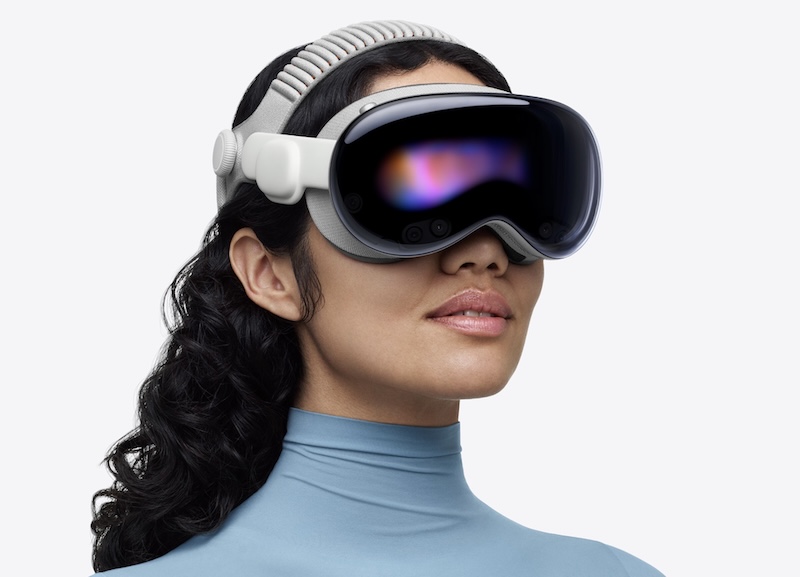
Apple’s Vision Pro wasn’t a virtual reality headset. It was a taste of what comes when they can remove the headset. This is just one of their many patents.
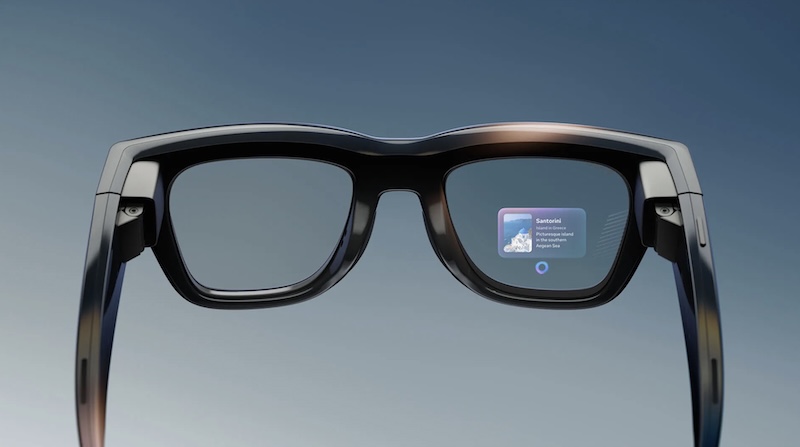
Meta’s new Ray-Ban AR glasses will launch this year with a tiny screen that sits over your vision. That screen will get bigger and bigger as the lenses get better. Their 2024 project Orion (formerly Project Nazare) was a pair of full AR glasses in prototype form.
And yes, amazing posters will make a comeback. If we can imagine it, AI will help us project it onto the Empire State Building.
Our digital lives will seamlessly integrate into our real lives. As walking, talking datapoints, everything we look at, everything we touch, everything we say could be up for grabs.
In ‘The Matrix’, a reality was created so wonderful, so perfect that none of us wanted to leave. In the movie, that meant that the crazy machines could harvest us as batteries. In four years time, the machines will just harvest data. Gigantic amounts of data.
And the world will be an empty, boring place unless you’re wearing what’s coming.
But where are we really going?
Andy Flemming is a freelancer.
His work can be found at andyflemming.com.
You can send him job offers, spam or book recommendations to andyfl@gmail.com