
Hakuhodo Institute of Life and Living ASEAN presents ASEAN Sei-katsu-sha studies 2026 “Decoding the Prime Generations”
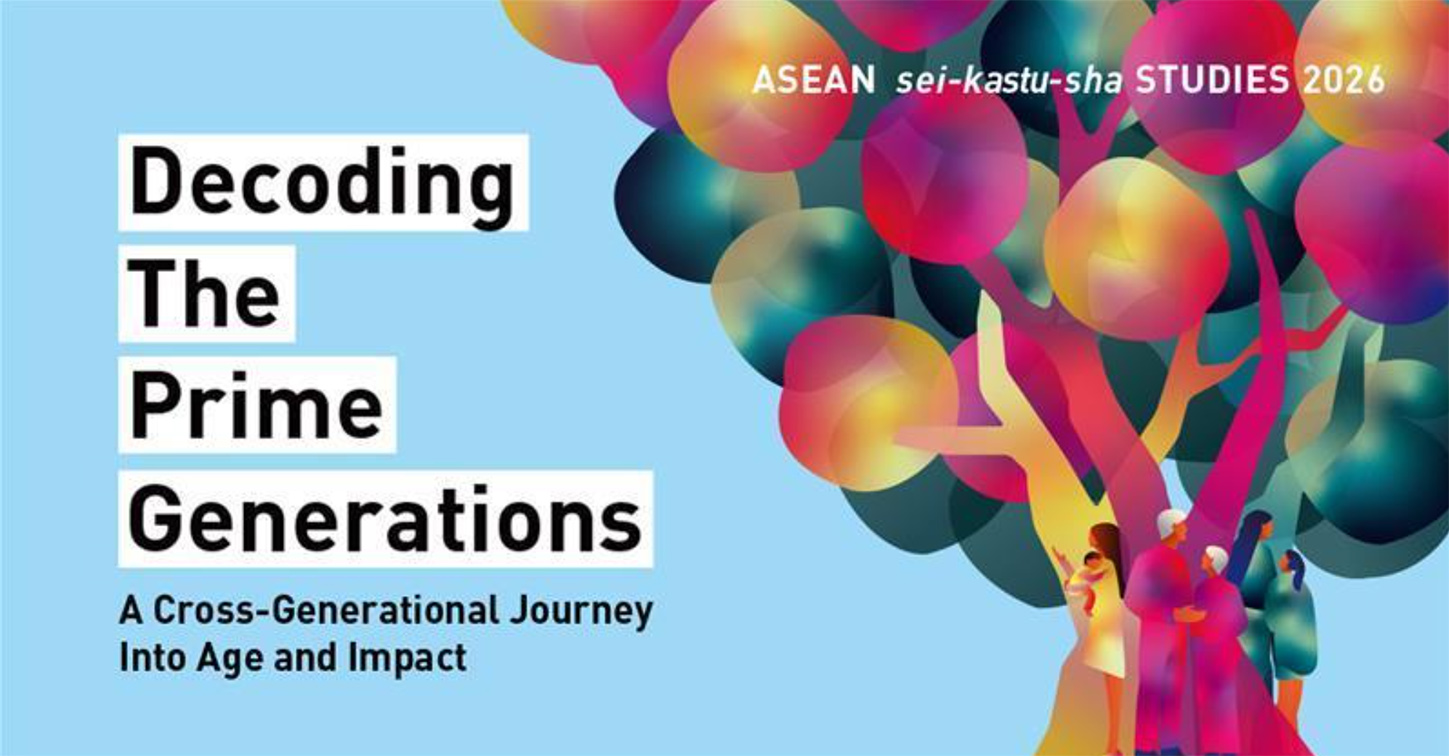
Hakuhodo Institute of Life and Living ASEAN (HILL ASEAN) held the “ASEAN Sei- katsu-sha Studies 2026” Forum in Bangkok, Thailand, to announce its latest research findings of the attitudes and behavior of the ASEAN sei-katsu-sha as well as implications for marketing. This year’s study, “Decoding the Prime Generations: A Cross-Generational Journey into Age and Impact,” explores how the ASEAN region is redefining the concept of aging and self-fulfillment.
While the ASEAN region has traditionally been defined by its youthful demographic profile, with marketing efforts largely centered on younger audiences, the region is now experiencing a gradual yet significant demographic shift. Amid a rapidly aging society and the evolution of values in the post-pandemic era, the influence of middle-aged and senior generations is rising to unprecedented levels, reshaping sei-katsu-sha behavior, cultural norms, and market dynamics.
Since its establishment in 2014, HILL ASEAN has provided multifaceted insights into ASEAN sei-katsu-sha (a term Hakuhodo uses to describe people not simply as consumers, but as fully rounded individuals with their own lifestyles, aspirations and dreams). In this latest study, HILL ASEAN focuses on this untapped “new market” to reveal how the ASEAN sei-katsu-sha are breaking free from age-related constraints to expand their life possibilities.
Debunking Myths: The Reality of the “Prime Generation”
The research focuses on the balance between “duties and desires” in ASEAN’s family and society-oriented cultures. HILL ASEAN deep-dives into their ideal lives, their thirst for self-actualization, and their reinterpretation of the aging process, debunking three common myths:
Myth 1: The ideal life is an “escape from reality”
Myth 2: Self-actualization is a “privilege reserved for the young”
Myth 3: Aging is an “unavoidable fear”
Through large-scale quantitative and qualitative home-visit surveys across six ASEAN countries, a new image emerged that contradicts the long-standing stereotype of middle-aged and senior citizens as passive or conservative.
HILL ASEAN redefines Millennials, Gen X, and Baby Boomers as the “Prime Generations”—those enjoying the pinnacle of their lives. The study reveals these generations are tech-savvy, constantly updating themselves, and serve as the mainstream core driving the modern ASEAN economy.
Definition of Millennials, Gen X and Baby Boomers

Redefining the “Prime Time” of Life
The study shows that in the ASEAN region, life satisfaction tends to decline among Millennials as they reach the transition from youth to adulthood and begin taking on family and social responsibilities. From that that point onward, however, it follows a steady upward trend with age. The data points to a clear shift toward a “Golden Age” of happiness beginning with the Millennial generation.
[Life Satisfaction by Generation]
● Gen Z: 83.8%
● Millennials: 82.0%
● Gen X: 85.2%
● Baby Boomers: 88.8%
Base: ASEAN Overall *Weighted sample size. Gen Z (n=963), Millennials (n=1,619), Gen X (n=1,187), and Baby Boomers (n=430) *Source: HILL ASEAN 2025 Data
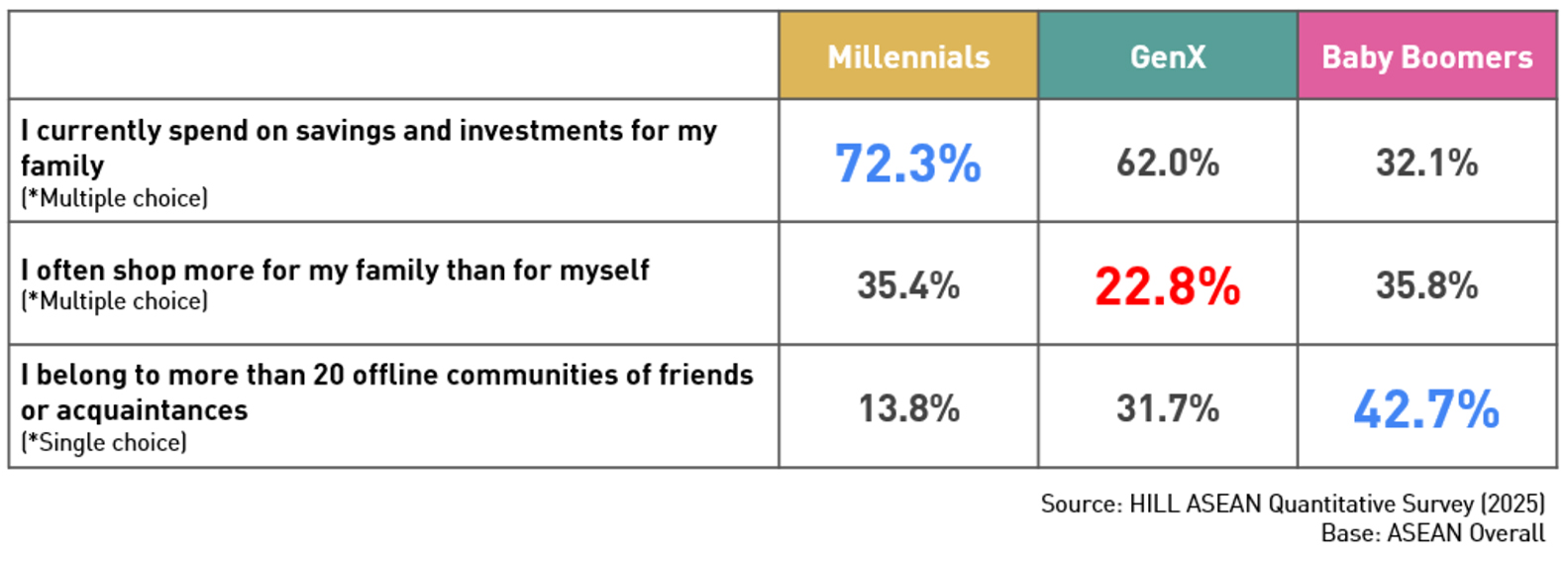
[The Ideal Life: Responsibility Combined with Passion]
● Myth: The ideal life is an escape from reality
● Truth: The ideal is “fulfillment of desires within connections”—pursuing personal passions while fulfilling responsibilities to family and society.
o Millennials: “Family-First Security”
Values shift as they take on heavy social burdens; their ideal is ensuring their family’s future happiness, even at the cost of their own priorities.
o Gen X: “The Harmonic Balance”
After years of self-suppression, they finally find the mental space to face themselves; their ideal is a balance between family happiness and personal desire.
o Baby Boomers: “Dignified Belonging”
While stepping back from formal duties, their ideal is maintaining broad connections and having a “place to belong” both inside and outside the family.
[The Thirst for Self-Actualization: A Lifelong Process]
● Myth: Self-actualization is a privilege for the young
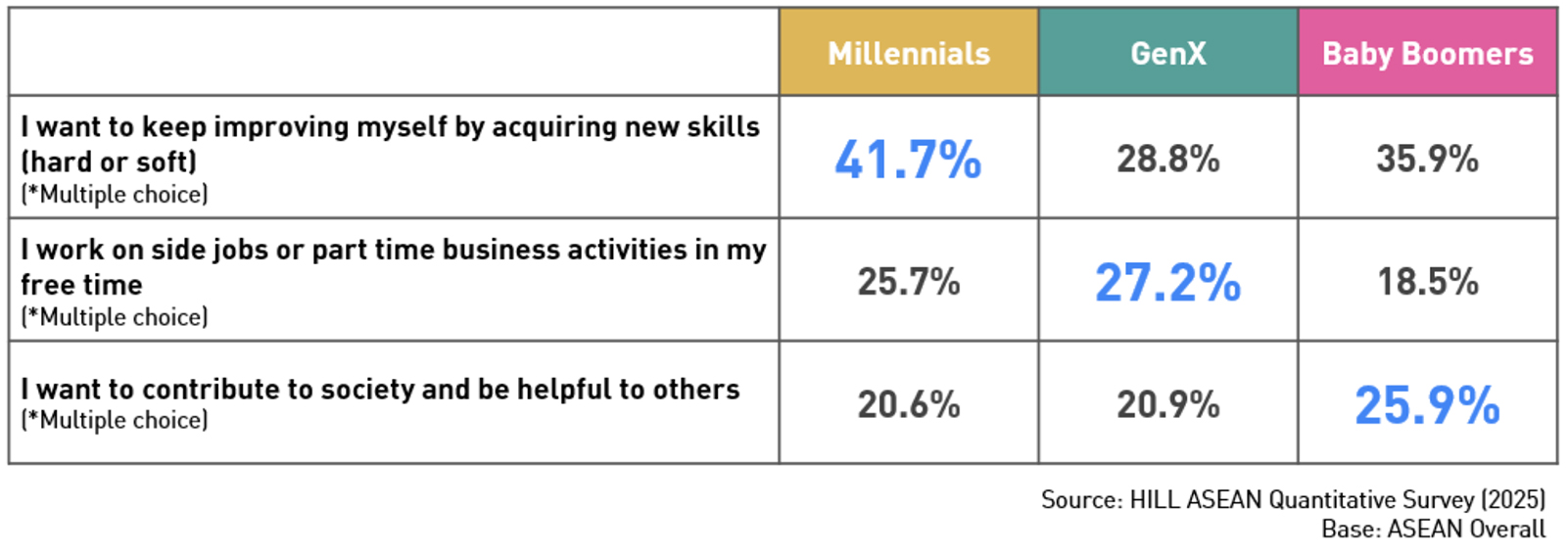
● Truth: There is no “retirement age” for self-actualization. Unlike younger generations, the Prime Generation seeks “Relational Self-Actualization,” proactively redefining their roles and purpose within their social circles.
o Millennials: “Upskilling for Protection”
They strive to enhance their skills and abilities as a means to continue protecting their family’s happiness.
o Gen X: “Personal Initiative”
They reconnect with their own sense of agency, taking initiative to pursue new projects and bringing their ideas to life.
o Baby Boomers: “Meaningful Contribution”
They aim to sustain their relevance by actively contributing to their family and society.
[The Value of Aging: “Layering Life”]
● Myth: Aging is an unavoidable fear
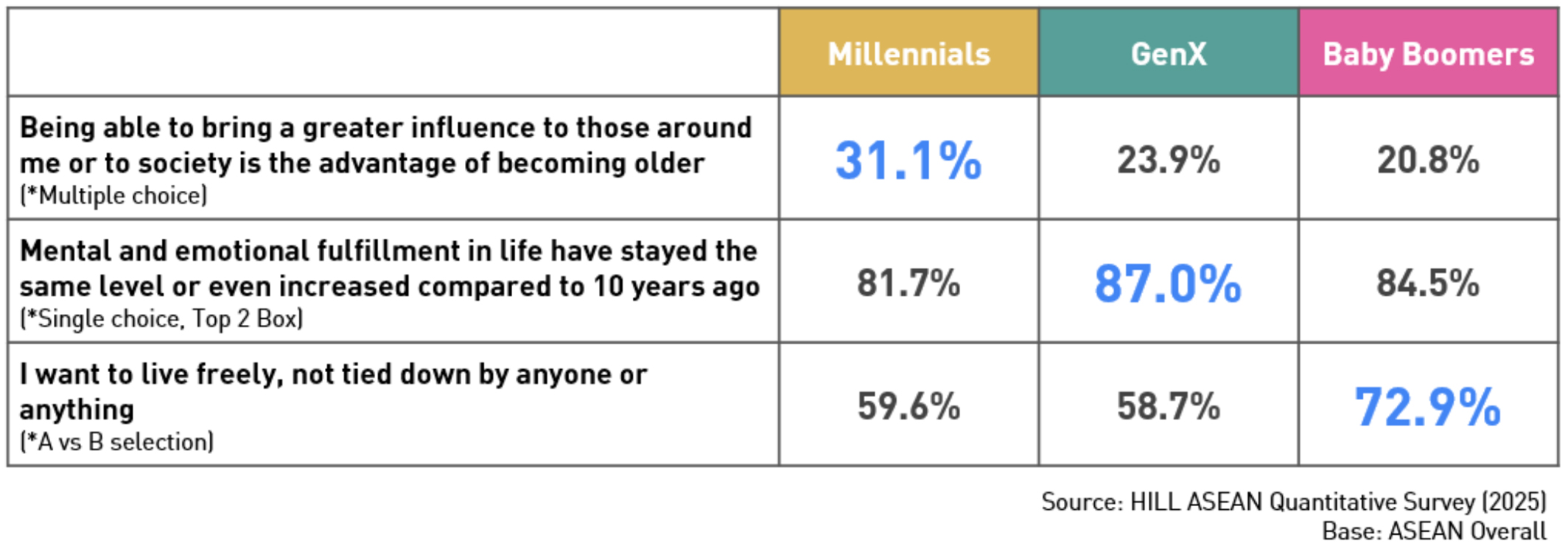
● Truth: Aging is not a decline, but a process of “adding new layers to one’s life.” It is a shift from “vertical growth” (seeking status in the eyes of others) to an introspective expansion of the inner self. HILL ASEAN calls this “Layering Life,” where experience and purpose accumulate at each stage to create a richer, more profound life.
o Millennials: “Wisdom Update”
They see aging as an accumulation of wisdom and a continuous update of their skill set. To them, the 50s and 60s are “experienced masters.”
o Gen X: “Self-Rediscovery”
Aging clarifies their true will. It is a process of rediscovering what they truly want and who they are.
o Baby Boomers: “Purposeful Redesign”
Retirement is not an exit. For Boomers, aging is about gaining new freedom and constantly renewing their reason for being.
ASEAN Prime Generations are Blossoming
The most compelling finding from this research is the fundamental shift in how ASEAN sei-katsu-sha perceive aging. In today’s ASEAN, growing older is no longer viewed as a “decline”; rather, each generation is “blossoming”—proactively leveraging the region’s distinctive social and familial ties to move beyond individual fulfillment and redefine their sense of purpose and identity in pursuit of a richer, more meaningful life.
These individuals are reinterpreting the roles expected of them by society and family—shifting from seeing them as mere “obligations” to viewing them as “growth assets.” While maintaining a deep respect for social harmony, they are proactively transitioning toward the “ideal selves” they have always aspired to become.
Characteristics by Generation:
1. Millennials – “Expanding Self”: Continuously expanding their capabilities to secure family happiness
and future options.
2. Gen X – “Rediscovering Self”: After years of supporting their families, they are reclaiming “me-time” to recharge.
3. Baby Boomers – “Redesigning Self”: Utilizing technology to remain active contributors to society and redesigning their lives to avoid becoming a “burden.”
Future of Brands: A “Pro-Aging” Approach
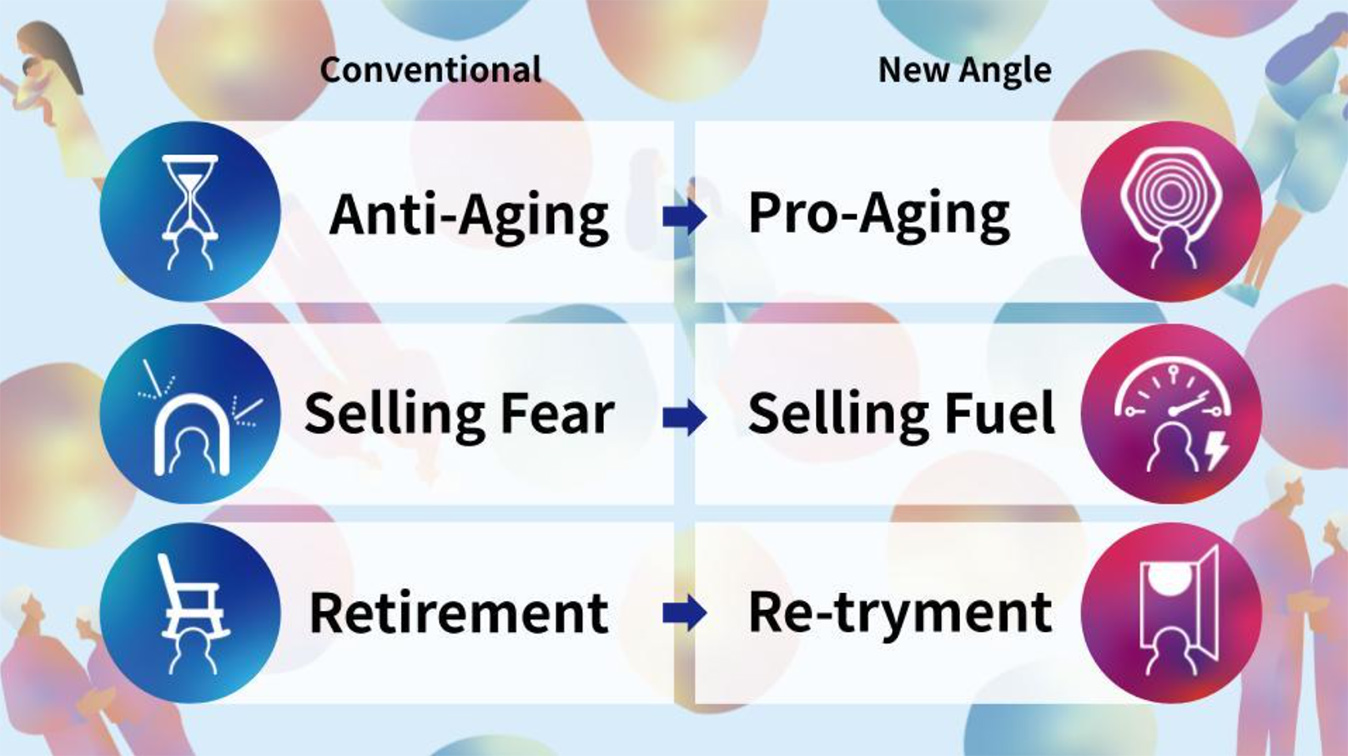
Traditionally, marketing to middle-aged and senior segments has focused on “anti-aging”—addressing the fear or resistance to decline. While effective for immediate action, HILL ASEAN proposes a shift toward a “Pro- Aging” perspective:
● Conventional Approach (Defensive): Providing solutions to fear and avoid aging.
● New Perspective (Offensive): Viewing aging as a “possibility” and supporting those who continue to update themselves.
Brands should evolve from being mere “solution providers for age-related problems” to “partners in self- renewal.” By providing high-value means for the Prime Generation to steer their own lives, brands can grow alongside this increasingly influential demographic.
Survey Overview: HILL ASEAN ”The Prime Generations Quantitative Survey 2025”
• Methodology: Online survey (Offline for some 60+ demographics)
• Regions: Thailand, Vietnam, Indonesia, Singapore, Malaysia, Philippines, Japan
• Sample Size: 4,900 respondents
• Target: All genders, aged 20–69, SEC A–C, distributed into Millennials, Gen X and, Baby Boomers
• Period: August 2025