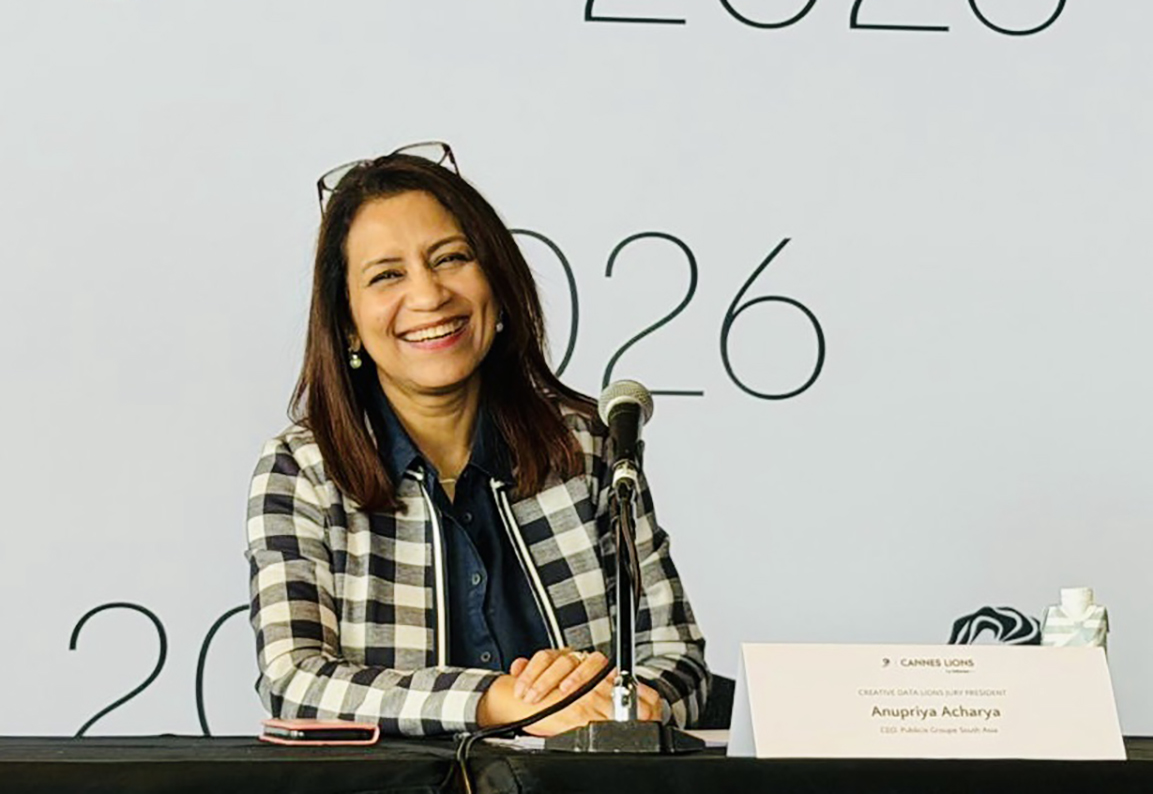
Cannes Creative Data Lions 2026: Anupriya Acharya identifies three trends shaping the category

As the Creative Data Lions winners were revealed at Cannes Lions 2026, Jury President Anupriya Acharya (pictured), CEO of Publicis Groupe South Asia, said the strongest work shared a common trait: using data not as a technology showcase, but as a tool to solve meaningful human problems and create measurable impact.
Acharya’s jury awarded the Grand Prix to ‘SOS POS’ for BCP (Banco de Crédito del Perú), created by Circus Grey in Lima.
Acharya said this year’s winners reveal some interesting themes.
“The Grand Prix winner stood apart for the beautiful simplicity of its idea and the imaginative use of data – data used to protect data! It turned an everyday payment terminal into a lifeline at a moment of real vulnerability. It solved a human problem, strengthened trust in a difficult-to-differentiate banking category, and showed how Creative Data can drive business impact while scaling meaningful protection for people and society.”
Three trends from Creative Data category
According to Acharya, three clear trends emerge from winners for Creative Data.
One stream of winners showed brands using large and complex data sets with real ambition – not to show off complexity, but to solve meaningful problems.
Suncorp Australia’s Haven turned climate, property and peril data into personalised resilience plans for homes. Fantasy Herd by McCann NZ turned live farm data into entertainment, bringing positivity to dairy and brand. The Philipstown WireCar Grand Prix used mapping and real race data to turn a local children’s tradition into an interactive global experience.
600K Network’s “Comando Con Venezuela” turned citizens into data infrastructure, transforming QR codes and smartphones into a real-time, verifiable election dataset under extraordinary risk.
Simple data, elevated by human ingenuity
Another strong pattern was work where the data was not necessarily the most complex, but the creative leap was exceptional. SOS POS used complaint and location data to turn payment terminals into emergency protection points. Skoda’s DuoBell used acoustic data to solve a real safety gap. These ideas proved that great Creative Data is not about how much data you have, but what you do with it.
Unseen data, becoming systems of change
A third pattern was work that used data to make invisible realities visible – and then build systems around them. Here to Stay for Mastercard transformed migrant underemployment into career pathways and economic opportunity. Forests Without Names for Hyundai turned fragmented kelp data into a shared environmental mapping standard. Dying Reviews (Hospice NZ) made the needs of people at the end of life visible to organisations.
“The best work did not just reveal problems; it created ways to act on them,” said Acharya.