
m25 Global Creative Series: Thomas Hongtack Kim on the Alchemy of Craft and Culture
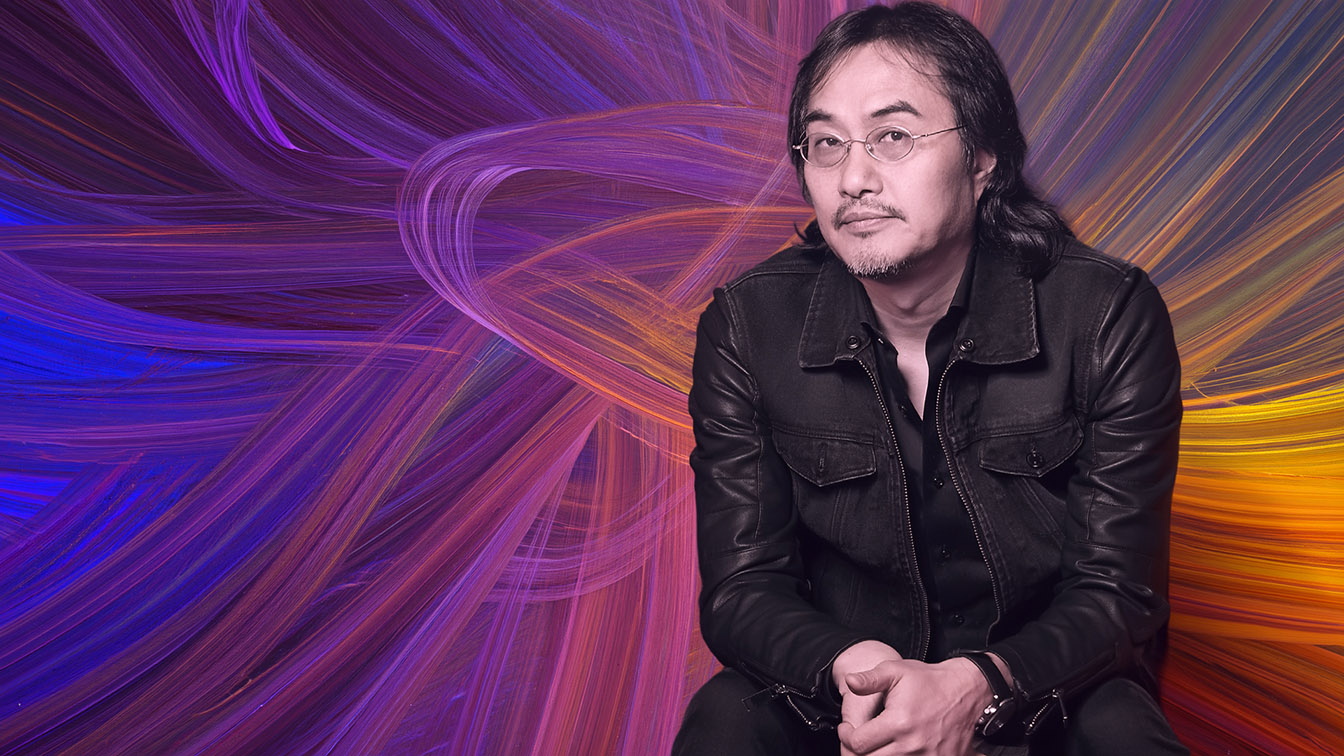
This edition of the m25 Global Creative Series heads to South Korea to catch up with Thomas Hongtack Kim, CCO of Paulus and Founder of 2kg. A legendary figure and veteran judge on the global awards circuit, Kim unpacks how to blend high-impact real-world experiences with scalable digital narratives through “Phygital Storytelling”. He also shares how “Extreme Craft” and infusing AI with “HI – Human Insight” are the keys to cutting through the noise and building a legacy rooted in brand activism and human truth.
Thomas, with brands moving budgets toward immersive, culturally relevant activations and experiences, how do you approach blending high-impact, refined real-world experiences like those inspired by Korean cultural moments or K-Pop trends with scalable digital narratives?
In Korea, there is a place called Seongsu-dong, often described as the holy ground of pop-up stores. Every time you visit, new brands are creating immersive pop-up experiences that stimulate all of people’s senses. We have clearly entered the era of experiential marketing.
I approach this through what I call “Phygital Storytelling,” where the primary goal is to transform real-world scarcity into digitally scalable narratives.
When designing these experiences, my perspective is always centered on the user journey. In the traditional advertising era, we used the word “consumer.” But in today’s experience-driven landscape, I prefer the word “user.” The difference is important. It is no longer just about someone spending money – it is about continuously engaging the experiences, curiosity, and participation of the people using the brand.
Ultimately, my focus is on user experience: How do we create an unexpected moment of surprise? And how do we turn that new experience into emotional connection and ultimately purchase?
Gentle Monster is a perfect example. The brand began with a simple but powerful question:
“Why are sunglasses considered fashion items, yet most sunglasses stores display products like bookstores?”
They realized that fashion is fundamentally about delivering new aesthetic experiences. So instead of designing a conventional retail store, they designed immersive aesthetic spaces.
In short, Gentle Monster is not a shop, it is a museum. Just as people visit museums to experience inspiration, buy products at the art shop, and spend time in the café or restaurant, consumers experience the same emotional journey at Gentle Monster and this kind of cutting-edge approach resonated just as powerfully on the global stage.
That is why Gentle Monster ultimately became not just a retail brand, but a destination people feel compelled to visit.
South Korea’s cultural exports, from K-Pop to film, have become a dominant global creative force. How do you see this ‘K-Culture’ sophistication shaping international advertising standards, and what is the biggest misconception about the Korean creative scene today?
South Korea’s cultural influence is fundamentally redefining the “aesthetic standards and production guidelines” of the global advertising industry. While international advertising previously focused on clear messaging and logical benefit delivery, the sophistication of K-Culture has established “Extreme Craft” and “Sensory Narrative” as the new global benchmarks.
Today, global brands are moving away from explaining product features, instead adopting a style that intuitively conveys a brand’s “vibe” and “dignity” through overwhelming mise-en-scène, much like Korean music videos or films and Gentle Monster’s case.
The biggest misconception about the Korean creative scene today is that it is merely a “trendy style.” However, its true competitive edge lies in a high-level “Contextualization” capability: the power to combine deeply local sentiments (tradition, hospitality, Korean narratives) with cutting-edge technology to make the world react instantly. From my limited perspective, I can say with some confidence that this represents a “victory of a sensory and intuitive worldview,” distinct from the logical, persuasion-based branding often seen in the West.
As a veteran judge on the global awards circuit, you’ve seen the best in digital innovation. How do you ensure campaigns rooted in deeply felt ‘human truths’ can cut through the noise when navigating hyper-efficient, AI-driven targeting and personalization on platforms like TikTok and Instagram?
What AI cannot truly handle is human consciousness. AI deals with intelligence, but human consciousness contains not only intelligence, but also uniquely human emotions, sensations and qualia, as well as collective emotions embedded in ways that cannot be fully explained.
Intelligence can be described. Consciousness cannot.
Through countless judging experiences, I have discovered that even in an AI-driven era, the projects that deeply resonate with people are those born from this human consciousness from genuine human insight.
Ultimately, AI must be infused with HI, Human Insight to create a meaningful chemical reaction and that is not merely a mechanical combination, but a form of alchemy. And in that moment, human truth finally emerges. In a word, magic happens when AI meets HI.
What role does AI play in your agency’s high-level, award-winning process today, and as an advocate for human imagination, where do you draw the line between machine efficiency and genuine, breakthrough creative ideas?
For me, AI is most effective as a tool for gathering references efficiently. When creating a creative solution, the concept building, narrative development, and final execution all come from my own mind.
Relying on AI from the very beginning even at the stage of defining the core concept is essentially outsourcing thought itself. It means giving up what it means to be Homo Sapiens: the human who thinks. It’s merely an ape.
So I do not really see a “boundary” between machine efficiency and creative ideas. AI is simply my tool.
Do you focus on capturing fleeting ‘attention’ in the short-form video economy, or do you prioritize building long-term cultural ‘resonance’ that defines a brand’s legacy? How does this distinction change the way you design campaigns?
I naturally place a higher priority on building long-term cultural resonance that defines a brand’s legacy.
The snack-culture approach of chasing fleeting attention is not my primary interest and there will always be countless people who can create that kind of content.
For me, a brand’s core value lies in its ability to resonate culturally over time.
Recently, we worked with Hyundai Motor Group on the “Vision Pulse” project. The technology uses UWB (Ultra-Wide Band) signals to detect obstacles around a vehicle in real time, including blind spots hidden behind walls. It was developed especially to help protect children who may suddenly run out from narrow alleyways.
Through our ongoing collaboration with Hyundai Motor Group, we have consistently tried to show how technology can solve real-world human problems. And of course, projects like this are only possible when technology is infused with genuine human insight.
South Korean creative work is masterful at using local cultural codes to achieve global resonance. What’s a campaign where leaning into a specific Korean tradition, historical element, or local nuance created unexpected global success?
South Korean creative work excels at translating deeply local elements into the language of “global luxury.” I would like to introduce a ‘Sulwhasoo’s reinterpretation of traditional craftsmanship’ as a prime example. Sulwhasoo does not treat local codes like “Mother-of-pearl” (Jagae) or traditional “knots” as mere ornaments; instead, it reconstructs them using the grammar of contemporary art and high fashion.
Specifically, the campaigns launched through their partnership with the Metropolitan Museum of Art in New York demonstrated how “traditional aesthetics” can transform into “contemporary value.” I think the decisive success of this project stems from two core factors: the elevation of local decorative elements into a universal global narrative, and the stimulation of primal, universal senses.
Rather than merely displaying traditional Korean patterns or materials, the project successfully recontextualized the underlying aesthetics of endurance and craftsmanship into the global language of “luxury.” Furthermore, by meticulously designing sensory codes—such as texture, warmth, and the scattering of light, it bypassed linguistic and cultural barriers, triggering an intuitive emotional resonance from a global audience.
With new pathways into advertising (AI tools, creator economies), how do you mentor young talent differently today compared to five years ago?
Nothing has fundamentally changed for me. My primary role is still creating creative solutions, and that is also what I mentor others to do. My focus remains on a simple 3D process:
Define the problem – Deep dive into insight – Develop the solution.
These principles have never changed. Just because the environment changes does not mean the essence changes.
As I often say, AI and other emerging technologies are ultimately tools that help improve ‘efficiency’ in creating creative solutions. But they do not replace the essence of creativity itself.
Looking toward 2030, what bold prediction would you make about how advertising will look and what legacy do you hope your campaigns leave for both brands and culture?
Recently, I published a book called ‘Brand Activism’. The core idea of the book is that brands should not ignore social problems they should create solutions for them. And in doing so, they can build a smarter and more meaningful form of branding.
My interest in this philosophy goes back a long way. The first brand activism-based solution I created was in 2012 with the CJ Mine Water campaign, which was a very early move even within the global creative scene.
No matter how advanced AI becomes, I still believe a brand’s core value should be rooted in brand activism. What has changed is not the philosophy, but the technology. Fourteen years ago, we used a simple water-drop-shaped price bar as part of the solution. Today, we can integrate far more sophisticated technologies into solution platforms.
But the essence remains the same. I continue to develop ‘Branded Solutions for Sustainability’, and I hope those ideas ultimately remain as part of a brand’s cultural legacy.
As for the industry cliché I would like to retire forever: the outdated practice of using celebrities simply for fame, without any real reason, meaning, or authentic connection to the idea.
Read previous episodes of m25’s Global Creative Series below:
Episode 4: Roman Carlo Olivarez, Executive Creative Director of TREYNA Group
Episode 3: Vidya Manmohan, Founder and Chief Creative Officer of V4GOOD
Episode 2: Jody Xiong, Founder, Director and CCO of The Nine Shanghai
Episode 1: Youji Noh, Executive Creative Director of TBWA\Media Arts Lab Seoul