m25 Global Creative Series: TREYNA Group’s Mylo de Borja on why grit, craft and conviction still matters in the age of fast content

In an industry obsessed with viral algorithms, instant metrics and quick-turnaround content, Mylo de Borja operates on a completely different frequency. Named the Philippines’ No. 1 Most-Awarded Creative in 2025 and ranking No. 27 among Asia’s Most-Awarded Women Creatives, the Deputy ECD at TREYNA Group didn’t get there by following trends.
de Borja built her path from the ground up starting as a designer before heading up design at BBDO Guerrero and leading creative at MullenLowe Philippines. Across those roles, she sought out teams who share that same creative rigour, producing work that engages directly with heavy, real-world issues.
That approach sits at the heart of TREYNA’s landmark campaigns, including The Right to Care and StripesFitCheck. For de Borja, great ideas don’t come from shortcuts; they come from pairing deep research into a brief with a genuine understanding of human culture. Whether she’s lecturing at Enderun, open-water swimming, or advocating for cat welfare and alternative mobility, her rule remains simple: proper craft and lived experience over quick fixes.
Even in a leadership role, de Borja stays hands-on. Her path from graphic designer to art director to creative director wasn’t about stepping back from the work, it was about knowing when to step in and when to get out of the way.
“I can’t really say that I stopped doing the work,” she explains. “At TREYNA Group, I’ve learned from our leaders that no one is above the work. One has to be ready when a situation calls for it. If I need to step in, I’m ready for it.”
During her day-to-day leadership and in her role teaching part-time at Enderun Colleges, her goal is to create space for others to find their own creative voice.
“I do my best not to prescribe my own ideas or executions, making sure our team members are able to exhibit their own point of view. It’s the same with my students: I set objectives and parameters, acknowledge their varying skillsets, and give them the freedom to express their point of view and lean into their strengths.”
For de Borja, creative craft is a personal response to a problem, shaped as much by research as by how life outside work feeds into your point of view. “Creativity to me is one’s unique response to a particular ask, whether it’s a user problem, a marketing brief, or a blank canvas. It’s an individual’s opportunity to express a solution through their own lens: a fresh, informed point of view.”
That unique response is built on a balance of two things:
Research: The deep-dive groundwork executed by the team to understand the mechanics of a brief.
Creative Point of View: A mix of culture, upbringing, daily observations, and the media you consume.
“Our personal input fuels our varying points of view. That’s what differentiates our strategy and our creative response to any brief.”
When a raw, fragile idea hits, Mylo’s instinct isn’t to run with it , it’s to test it.
“It’s always best not to assume that an idea is brilliant,” she notes. “If I see potential in a random thought, I try to think it through first and talk it through with the team. We bounce it off each other, bounce it off the brief, and test it against the strategy.”
For younger creatives entering the industry, her advice is clear: don’t fall in love too quickly with your first draft.
“I make it a point for younger creatives to understand that generating and iterating ideas rather than just falling in love with a single thought is an exercise they have to go through all throughout the creative process.”
The roadmap for junior talent has fractured. Today’s young creatives enter an ecosystem dominated by hyper-specialization, fast gig-economy cycles and instant gratification. While their advantage is unprecedented, they have endless tools and can literally create their own opportunities. de Borja sees a critical creative muscle at risk of atrophy.
“Grit is something they can’t develop in an instant,” she says. “It takes repetition, sometimes failure, bouncing back, that kind of perseverance alongside the passion to Create.”
Where modern agency culture rewards quick clicks, the campaigns de Borja took part in demand marathon endurance. “I think conviction plays a big role in the process,The core team of these campaigns was well aware of the problem, the proposed solutions, and the level of commitment needed to get the job done. Fast was never on the table.”
What started as a local initiative has now pushed all the way to Congress and the Senate.
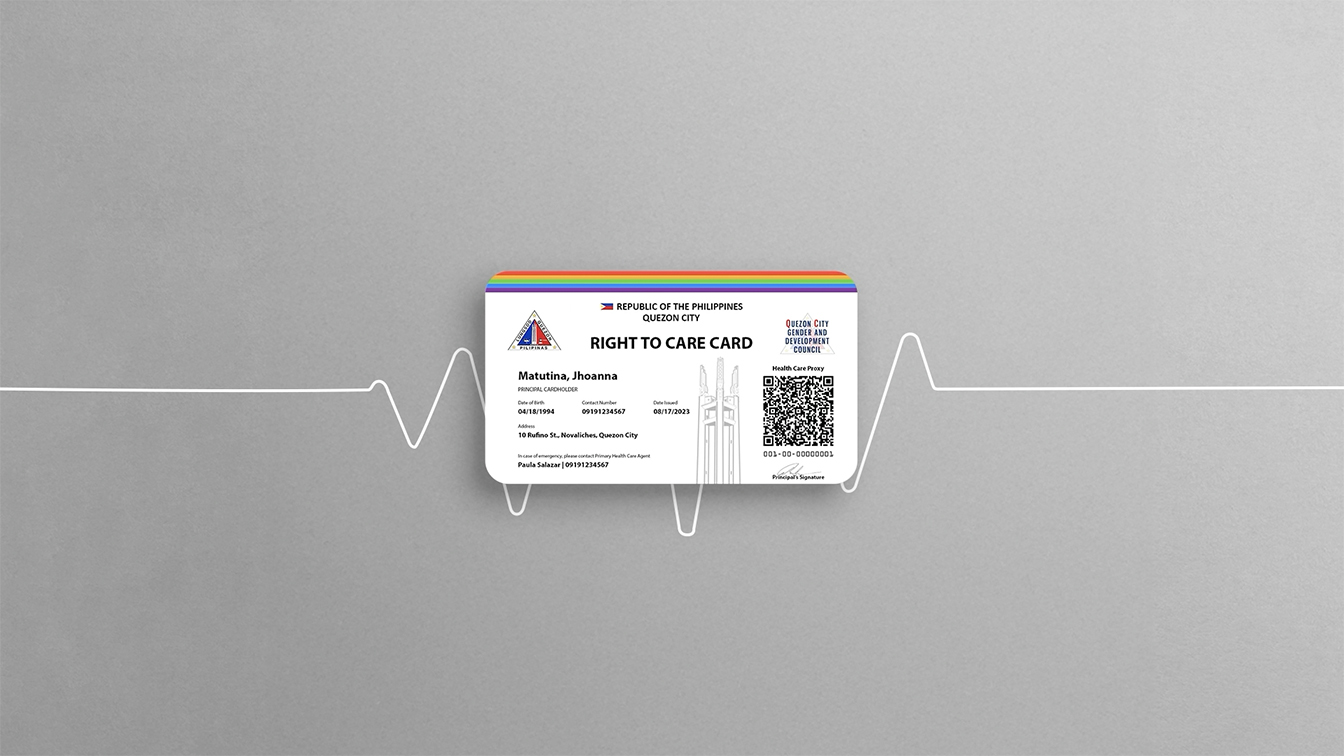
The Right to Care: A legal document in the form of a card, addressing medical injustices against LGBTQIA+ relationships in emergency hospital cases. The core creatives lobbied for the campaign directly attending hearings and gathering resource speakers to help implement the solution in Quezon City. Their continuous commitment has since opened up opportunities for the campaign to be implemented in other cities, and it has now reached Congress and the Senate. “The work was never about chasing a win,” de Borja says, “but about rooting for the idea and the solution itself.”
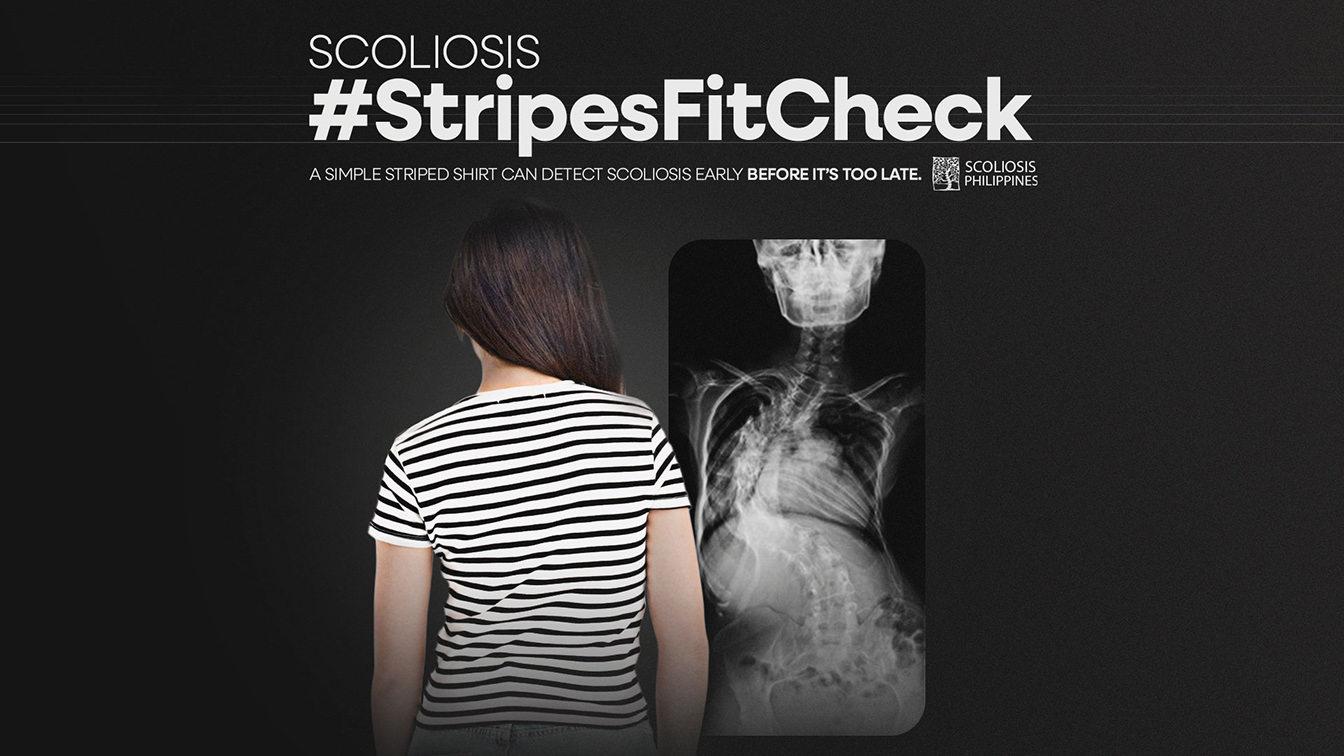
StripesFitCheck: A campaign focused on raising awareness and encouraging early detection for scoliosis, built around partnering with the right people to reach the right audience. The team collaborated with Scoliosis Philippines and former Miss Universe Catriona Gray, who revealed her own scoliosis condition to help raise awareness. The campaign went on to bring in the Hamburglar to lend his iconic stripes. These efforts helped launch National Stripes Day with the national government. The core team’s commitment to the campaign brought in results beyond expectations.
It’s something she tries to instill in her team a principle she picked up from her own leaders: know where to place your bets on your ideas, and hold yourself accountable for seeing them through.
Ask de Borja about artificial intelligence, and you won’t get tech panic or uncritical hype. She views it with the calm realism of a talent who knows that software cannot replace human empathy.
“I see AI as a tool for creatives (but that doesn’t discount the fact that I’m aware of the developing issues and concerns around AI in the Philippines, though that’s a discussion for another time). At the end of the day, it’s something we can live without. I’m honestly not against using it to develop proofs of concept. I draw the line at the irresponsible use or misuse of it, for example, when a creative relies on AI before generating their own ideas first, or when the output isn’t grounded in a unique point of view.”
For de Borja, the future of the industry relies on a double conviction: while AI can speed up rapid prototyping, true legacy work requires time, grit, and the perspective that comes when women are given genuine room to lead. Software can generate a quick option, but only lived experience can change the conversation.