
m25 Global Creative Series: Raymund Sison talks on the future of humanKind creativity
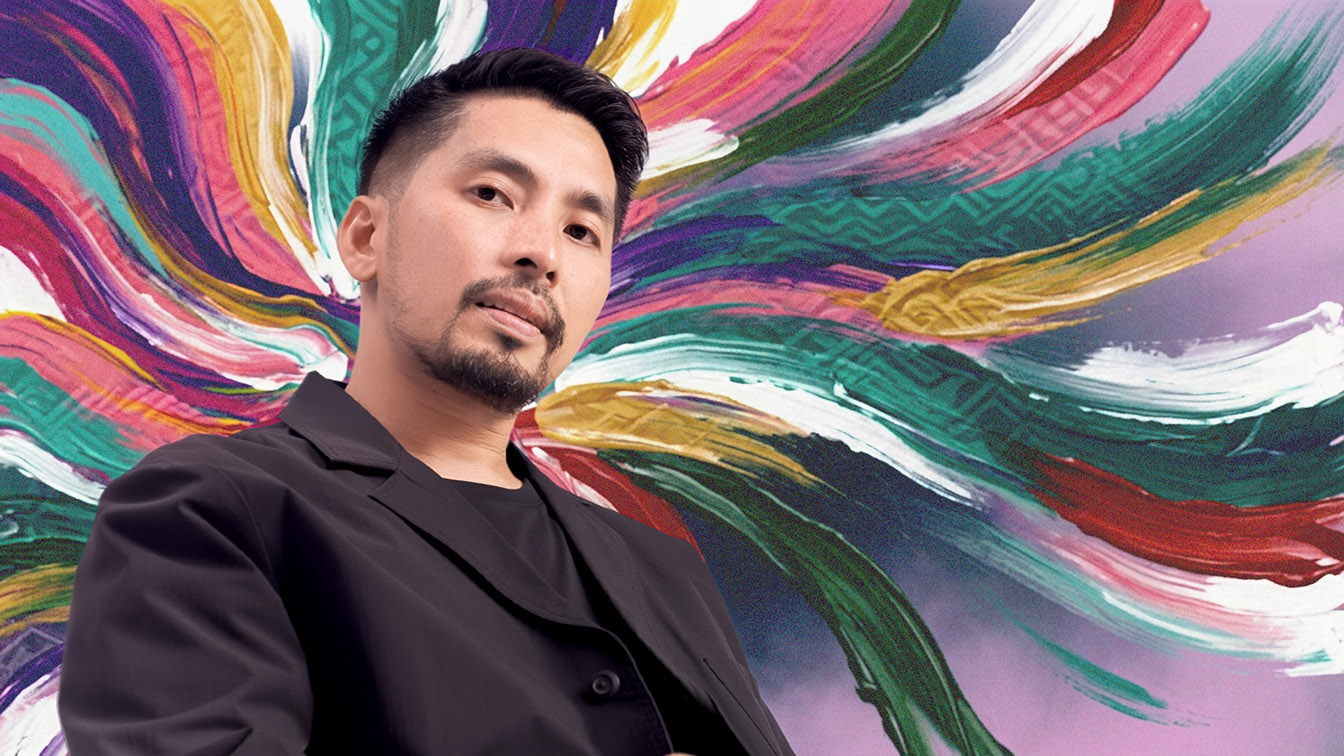
In this episode of m25‘s Global Creative Series the spotlight is on the Philippines and Raymund Sison, the Founder, CEO, and CCO of Lennon Group. From advising startups to launching social impact ventures and shaping the next generation of industry leaders as the Chairperson of DMAP Digicon 2026, Sison’s work is driven by belief: creativity should care about humans and move the world forward. His award-winning career spans the globe from Cannes to New York to Shanghai, but his heart, intuition, and cultural compass remain fiercely rooted in Manila.
The Shift to Experience-Led Branding: With global brands moving budgets away from traditional reach and toward immersive, culturally resonant activations, how do you reconcile high-impact, refined real-world experiences with the need for scalable digital narratives? Given your work in the Philippine market a culture that thrives on social and communal experience, what do you see as the “Filipino way” to turn local physical activations into global digital stories?
The shift toward experience-led branding isn’t about choosing between physical and digital. It’s about understanding the role each one plays in how people experience brands and make meaning. There’s nothing like real-world immersive experiences. You can feel them, live them, and be part of them in a way that’s hard to replicate elsewhere. But they’re also fleeting.
Digital extends that life. It takes something deeply felt and lets it travel — across time, platforms, and people. The question isn’t how to replicate the experience, but how to carry its emotional truth forward. How do you turn a feeling into something that can be revisited and shared?
In the Philippines, this becomes even more powerful. Because experience here is inherently communal. We don’t just attend moments — we co-create them. From fiestas to concerts to community gatherings, there’s always a shared story. We pass things on. We make meaning together.
That’s why everything becomes social by default. On-ground is social. Experience is social. Even OOH is social. Social isn’t just a channel — it’s the connective tissue. In one of the world’s most social cultures, that’s a distinct advantage. The brands who will win are those that create experiences designed to be lived and shared.
Local Identity vs. Global Aesthetic: South Korea has successfully exported ‘K-Culture’ as a dominant aesthetic standard. As a creative looking at the Philippines from both the inside and out, what do you believe is the biggest untapped potential of the “Filipino aesthetic” on the global stage, and why has it historically been more challenging to translate that specific “vibe” into international advertising standards?
I think the Filipino aesthetic has always been there — it’s just never been easy to define in a single, exportable form and I think that’s because, at our core, we’re halo-halo. It’s a Filipino expression that means mix-mix. We’re Asian geographically, but our religion is largely rooted in Europe. Our education system carries strong American influence. We have the oldest Chinatown in the world. We have a little Japanese influence. And all of that sits on top of indigenous traditions that are still very much alive.
So we’re not one thing — we’re many things at once. That makes us incredibly adaptable, but also harder to package into a singular visual identity the way Korea has done with K-Culture, but maybe that’s the point. The untapped potential of the Filipino aesthetic isn’t in creating a fixed “look,” but in expressing its sensibilities fully – open, adaptable, colorful, and quite a mix of many things. Historically, we’ve struggled because we’ve tried to simplify ourselves to fit global standards. But what makes us relevant globally is actually our ability to hold contradictions, to move between cultures, and to connect with different kinds of people.
Human Truths in the Age of Hyper-Personalization: As we navigate hyper-efficient, AI-driven targeting, the “human truth” of a campaign is often sacrificed for algorithmic precision. How do you ensure your work specifically within a splinter agency model maintains a soul that cuts through the noise? How does your Filipino background influence your definition of what a “universal human truth” actually looks like?
I’d give it to AI to be able to do hyper-targeted, hyper-efficient work. To a certain extent, I think it can capture generic human truths. Rarely hyper-specific truths. So the risk here is that we start seeing people as generic segments instead of as whole human beings. People don’t live in clean categories. Identities overlap. Context matters. Sensibilities vary. For me, a human truth lives in that complexity. It’s something grounded enough to feel real, but open enough for others to recognize themselves in it to say “Omg we’re the same!” It’s the human truth experienced by humans that create resonance.
Working within a boutique model helps protect that kind of thinking because you stay close to what really matters and it’s easier to catch the little nuances. Growing up Filipino also shapes that instinct. We are a culture that rarely says everything directly. We rely on tone, context, and shared understanding. Humor carries meaning. Silence carries meaning. You learn early on to read between the lines, to sense what is being felt even when it isn’t explicitly said. That sensitivity carries into the work.
So when we talk about universal human truth, it’s not about what the data AI can pull. It’s about finding the emotional center within those details. The part that feels true no matter where you’re from.
The AI Creative Workflow: There is a growing divide between those who view AI as a cost-cutter and those who view it as a creative partner. Where do you draw the line? In your personal creative process, how are you using AI to enhance your output without outsourcing the “thought” itself, and how are you navigating this balance with your own creative teams in Manila? Are you scared of AI now sounding very much like humans?
AI expands what we can do. But it should never decide what we should do. That’s the line. It’s tempting to confuse output with meaning. To think that just because we can create faster, we should create more. Nobody remembers volume. People remember intention.
At Lennon Group, we operate on a simple AI principle we call HumanKind Superintelligence. The technology is there to amplify what matters — connection, creativity, impact — while respecting integrity, privacy, and originality. So the conversation isn’t about limiting AI. It’s about grounding it. Because the work will never be judged by how efficiently it was made, only by whether it made someone feel something.
No, I’m not afraid of AI sounding like humans. I’m afraid of humans starting to sound like machines.
Attention Economy vs. Cultural Resonance: In the short-form video economy, there is immense pressure to chase fleeting engagement. As a leader building the next generation of creative agencies, do you view “attention” as a vanity metric or a necessity? How does this distinction change the way you structure your campaigns for brands in the Philippines versus the projects you see succeeding globally?
Attention is necessary — it’s how things enter people’s awareness. But it’s not the measure of success, it’s actually the easiest to get, because you can buy it. To me, attention is just the beginning. The real question is what happens after. Does it stay with someone? Does it add value to their life? Does it matter?
In the Philippines, where people are very expressive and highly social, attention can be generated quickly. But that also means it disappears quickly. So the focus has to shift from capturing attention to creating resonance. Something that feels worth remembering or sharing.
Globally, attention is harder to earn because of the sheer volume of content and the noise is just too much. But when something resonates, it tends to travel further. In both contexts, the principle is the same. Attention is just the entry point. What matters is creating something that resonates enough to stay.
Cultural Nuance as today’s brand’s biggest advantage: What is a recent campaign you’ve done where leaning into a specific local nuance or a hyperlocal subculture context created unexpected traction? How do you teach your teams to avoid “localizing” just for the sake of it, and instead use local codes to build high-end, contemporary value that translates abroad?
Allow me to share a recent piece of work we did for the film Some Nights I Feel Like Walking, in collaboration with Lunchbox. It’s a Filipino queer indie film by Petersen Vargas about queer desire set in the streets of Manila. But like many films rooted in queer truth, it faced a familiar risk: invisibility. No big stars. Minimal budget. A five-day run in just three cinemas. So the challenge wasn’t just awareness, it needed desire. Loud enough to keep the film in the cinema and get more days, more screens.
So instead of bringing the film to a typical movie promo, we brought the film to where queer desire exists. We activated in queer spaces — on the streets, in dark alleys, in places that felt both raw and real. We toured the film inside a gay dating app, meeting audiences not as viewers but as participants in the same emotional landscape the film inhabits and we premiered it in the city’s OG underground cinema, one that has quietly cradled queer stories and communities for generations.
What emerged wasn’t a campaign, but an extension of the film itself. The line between promotion and film blurred. I think it’s a kind of work that truly captures local culture and truly understands the community it represents. And the response was more than we expected. The community showed up loudly. With a full-house talk-of-the-town premiere and sold-out block screenings. The initial 5-day screening extended… to one week, then two, then three full weeks nationwide.
We never treat culture as a flavor you add at the end. Because when you localize for the sake of it, you flatten something alive into something decorative. Instead, we start by connecting with the community we aim to connect with. We start with them and we ask: What are the codes they already live by? What feels true here, even if it feels invisible to outsiders?
Local nuance is about revealing what’s true. The more honestly you reflect a subculture’s textures, tensions, contradictions, the more it resonates beyond geography. Because people don’t connect with local flavor. They connect with truth. So our principle is simple: Don’t translate culture. Reveal it. Respect it. Build from within it.
Mentorship in the Creator Economy: With the rise of AI tools and the creator economy, the pathways into advertising have exploded. How has your approach to mentoring young Filipino creatives changed compared to five years ago? What is the one “old-school” skill you refuse to let your junior teams forget, even as they embrace new technology?
The biggest shift in mentorship today is this: access is no longer the problem. What’s changed is the role we play. Mentorship used to be about teaching the craft in isolation, how to do things, step by step. But now, they’re exposed to everything all at once. Trends, tools, references, opinions. An endless stream of inputs and in that kind of noise, everything starts to feel equally important, when in reality, very little is.
So the work now is different. The conversations I find myself having aren’t about execution as much as they are about attention. What is actually worth caring about? Why does this idea deserve to exist? Where should you be heading? What kind of creative do you want to become? Because the “how” is everywhere you can learn it online, anytime. But the “why”? That’s what needs guidance. That’s what mentorship is for now.
But if there’s one thing, one belief, I refuse to let young creatives forget, it’s this: You are your greatest, most unfair advantage. It sounds generic. Almost too simplistic. But it’s the most important thing I can tell them.
There is no one else in the world who sees exactly the way you see. No one who has lived your life, felt your joys, or survived your heartbreaks. No one who carries your exact context into the work. So use it. Use your perspective. Your contradictions. Your truths. Tell the stories only you can tell. Create the ideas that only you can create.
These are the kinds of things AI can’t do. And you are someone AI can’t be.
The Future of the “Splinter Agency” (2030) : You’ve chosen the path of the “splinter agency.” Looking toward 2030, how do you predict the agency model will look in the Philippines, and what legacy do you want the Lennon Group to leave?
By 2030, I think the agency model in the Philippines will become less about bigness, silos, and competition and more about independence, intention, and collaboration. There will be more small, independent groups. More fluid collaborations. More cooperation. But what will separate the ones that last from the ones that don’t is clear intention and belief system. What do you actually believe? Can you consistently express that through the work and your ways of working? This is what we’re trying to do in our little independent agency.
It’s hard to talk about legacy when you’ve only just started, we’re a little over a year at Lennon Group. We’re young and new. But we’re quite sure about what we stand for and where we want to go but to answer your question, what we want to leave behind is not just a body of work, but a way of thinking and a way of doing. Something that shows the world you can build an agency that can both be great and good, a place where creativity has a conscience and excellence comes with responsibility, where work can be both truly meaningful and commercially rewarding. I may be very optimistic, but I think it’s very possible.
The Future of Creativity: What is the future of creativity in the age of very accessible AI?
My fearless prediction: the future of creative agencies isn’t a factory, it’s a creative studio of meaning. It’s no longer about making more, it’s about answering a deeper question: what truly deserves to exist?
In a world that’s starting to get flooded with AI-generated noise, where speed and scale are already won, creativity becomes the line between what gets noticed and what truly moves people. When everything can be made instantly, agile may lose its edge. Maybe what may rise instead is something rarer — something deliberate. Thoughtful. Slow-made. Intentional.
Which makes me truly believe that creativity is going to matter more than ever. It’s what gives our work a pulse, a point of view, a reason to be remembered. It’s going to be our most unfair advantage.
Read previous episodes of m25’s Global Creative Series below:
Episode 6: Janath Gamage, Creative Director of Ogilvy SG/WPP@Unilever
Episode 5: Thomas Hongtack Kim, CCO of Paulus and Founder of 2kg
Episode 4: Roman Carlo Olivarez, Executive Creative Director of TREYNA Group
Episode 3: Vidya Manmohan, Founder and Chief Creative Officer of V4GOOD
Episode 2: Jody Xiong, Founder, Director and CCO of The Nine Shanghai
Episode 1: Youji Noh, Executive Creative Director of TBWA\Media Arts Lab Seoul